

Categories
- Antiques & Collectibles 13
- Architecture 36
- Art 48
- Bibles 22
- Biography & Autobiography 816
- Body, Mind & Spirit 145
- Business & Economics 30
- Children's Books 15
- Children's Fiction 13
- Computers 4
- Cooking 94
- Crafts & Hobbies 4
- Drama 346
- Education 64
- Family & Relationships 59
- Fiction 11842
- Foreign Language Study 2
- Games 19
- Gardening 17
- Health & Fitness 35
- History 1383
- House & Home 1
- Humor 147
- Juvenile Fiction 1884
- Juvenile Nonfiction 202
- Language Arts & Disciplines 89
- Law 16
- Literary Collections 687
- Literary Criticism 179
- Mathematics 13
- Medical 43
- Music 40
- Nature 181
- Non-Classifiable 1768
- Performing Arts 7
- Periodicals 1453
- Philosophy 65
- Photography 2
- Poetry 897
- Political Science 205
- Psychology 44
- Reference 154
- Religion 516
- Science 128
- Self-Help 87
- Social Science 83
- Sports & Recreation 34
- Study Aids 3
- Technology & Engineering 60
- Transportation 23
- Travel 463
- True Crime 29
Confucius
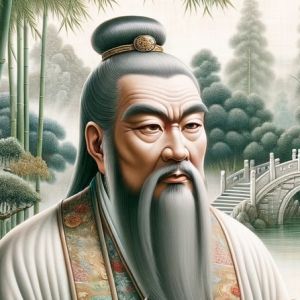
Confucius (551–479 BCE) was a Chinese philosopher, teacher, and political figure whose ideas profoundly shaped Chinese culture and ethics. He is best known for his teachings on morality, proper social relationships, and governance, which are compiled in "The Analects." Confucius emphasized virtues such as filial piety, righteousness, and benevolence, advocating for a harmonious society where individuals act according to their roles and duties. His ideas laid the foundation for Confucianism, a philosophy that influenced East Asian societies for centuries.
Author's Books:
Sort by:
by:
Confucius
INTRODUCTION Confucius was born in the year 550 b.c., in the land of Lu, in a small village, situated in the western part of the modern province of Shantung. His name was K'ung Ch'iu, and his style (corresponding to our Christian name) was Chung-ni. His countrymen speak of him as K'ung Fu-tzu, the Master, or philosopher K'ung. This expression was altered into Confucius by the Jesuit...
more...
by:
Confucius
THE ANALECTS BOOK I On LearningвÐâMiscellaneous Sayings:вÐâ "To learn," said the Master, "and then to practise opportunely what one has learntвÐâdoes not this bring with it a sense of satisfaction? "To have associates in study coming to one from distant partsвÐâdoes not this also mean pleasure in store? "And are not those who, while not...
more...