

Categories
- Antiques & Collectibles 13
- Architecture 36
- Art 48
- Bibles 22
- Biography & Autobiography 816
- Body, Mind & Spirit 145
- Business & Economics 32
- Children's Books 15
- Children's Fiction 13
- Computers 4
- Cooking 94
- Crafts & Hobbies 4
- Drama 346
- Education 65
- Family & Relationships 62
- Fiction 11848
- Foreign Language Study 2
- Games 19
- Gardening 17
- Health & Fitness 36
- History 1383
- House & Home 1
- Humor 147
- Juvenile Fiction 1884
- Juvenile Nonfiction 202
- Language Arts & Disciplines 89
- Law 16
- Literary Collections 687
- Literary Criticism 179
- Mathematics 13
- Medical 43
- Music 40
- Nature 181
- Non-Classifiable 1768
- Performing Arts 7
- Periodicals 1453
- Philosophy 65
- Photography 2
- Poetry 898
- Political Science 206
- Psychology 44
- Reference 154
- Religion 516
- Science 128
- Self-Help 89
- Social Science 84
- Sports & Recreation 34
- Study Aids 3
- Technology & Engineering 60
- Transportation 23
- Travel 463
- True Crime 29
Charlotte Mary Yonge
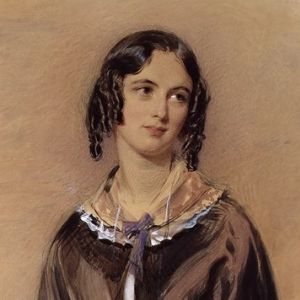
Charlotte Mary Yonge (1823-1901) was an English novelist renowned for her extensive literary output, particularly her works for children and young adults. Influenced by the Oxford Movement, her writing often reflected strong Anglican religious themes and Victorian moral values. Among her most famous works is "The Heir of Redclyffe" (1853), which achieved great popularity in the 19th century.
Author's Books:
Sort by:
CHAPTER I. One summer afternoon, Helen Woodbourne returned from her daily walk with her sisters, and immediately repaired to the school-room, in order to put the finishing touches to a drawing, with which she had been engaged during the greater part of the morning. She had not been long established there, before her sister Katherine came in, and, taking her favourite station, leaning against the window...
more...
CHAPTER 1 There are none of England's daughters that bear a prouder presence. And a kingly blood sends glances up, her princely eye to trouble,And the shadow of a monarch's crown is softened in her hair. —ELIZABETH BARRETT BROWNING The sun shone slanting over a spacious park, the undulating ground here turning a broad lawn towards the beams that silvered every blade of grass; there, curving...
more...
CHAPTER I. A SYLLABUB PARTY. Oft had I shadowed such a groupOf beauties that were bornIn teacup times of hood and hoop,And when the patch was worn;And legs and arms with love-knots gay.About me leaped and laughedThe modish Cupid of the day,And shrilled his tinselled shaft.—Tennyson. If times differ, human nature and national character vary but little; and thus, in looking back on former times, we are...
more...
CHAPTER IThe Experiences Of Goody Madge “Dear Madam, think me not to blame;Invisible the fairy came.Your precious babe is hence conveyed,And in its place a changeling laid.Where are the father’s mouth and nose,The mother’s eyes as black as sloes?See here, a shocking awkward creature,That speaks a fool in every feature.” GAY. “He is an ugly ill-favoured boy—just like Riquet ÐÑ la...
more...
CHAPTER I. One single flash of glad surpriseJust glanced from Isabel's dark eyes,Then vanished in the blush of shameThat as its penance instant came—'O thought unworthy of my race!' The Lord of the Isles. As little recked Fitzjocelyn of the murmurs which he had provoked, as he guessed the true secret of his victory. In his eyes, it was the triumph of...
more...
Not many of us remember Otterbourne before the Railroad, the Church, or the Penny Post. It may be pleasant to some of us to try to catch a few recollections before all those who can tell us anything about those times are quite gone. To begin with the first that is known about it, or rather that is guessed. A part of a Roman road has been traced in Otterbourne Park, and near it was found a piece of...
more...
CHAPTER IHONOURS ‘Oh, there’s that stick. What can he want?’ sighed one of a pair of dignified elderly ladies, in black silk, to the other, as in a quiet country-town street they saw themselves about to be accosted by a man of about forty, with the air of a managing clerk, who came up breathlessly, with a flush on his usually pale cheeks. ‘Miss Lang; I beg pardon! May I be allowed a few...
more...
CHAPTER IWHAT WILL BECOME OF ME? A London dining-room was lighted with gas, which showed a table of small dimensions, with a vase of somewhat dirty and dilapidated grasses in the centre, and at one end a soup tureen, from which a gentleman had helped himself and a young girl of about thirteen, without much apparent consciousness of what he was about, being absorbed in a pile of papers, pamphlets, and...
more...
CHAPTER IThe Model And Her Copies There is sure another Flood toward, that so many couples are coming to the Ark.—As You Like It “Ah! it is a pitiable case!” “What case, boys?” “Yours, mother, with such an influx of daughters-in-law.” “I suspect the daughters-in-law think themselves more to be pitied.” “As too many suns in one sphere.” “As daughters-in-law at all.”...
more...
CHAPTER I. There was once a wonderful fortnight in little Lucy's life. One evening she went to bed very tired and cross and hot, and in the morning when she looked at her arms and legs they were all covered with red spots, rather pretty to look at, only they were dry and prickly. Nurse was frightened when she looked at them. She turned all the little sisters out of the night nursery, covered Lucy...
more...