

Categories
- Antiques & Collectibles 13
- Architecture 36
- Art 48
- Bibles 22
- Biography & Autobiography 815
- Body, Mind & Spirit 144
- Business & Economics 28
- Children's Books 15
- Children's Fiction 11
- Computers 4
- Cooking 94
- Crafts & Hobbies 4
- Drama 346
- Education 61
- Family & Relationships 59
- Fiction 11835
- Games 19
- Gardening 17
- Health & Fitness 34
- History 1378
- House & Home 1
- Humor 147
- Juvenile Fiction 1873
- Juvenile Nonfiction 202
- Language Arts & Disciplines 89
- Law 16
- Literary Collections 686
- Literary Criticism 179
- Mathematics 13
- Medical 41
- Music 40
- Nature 180
- Non-Classifiable 1768
- Performing Arts 7
- Periodicals 1453
- Philosophy 65
- Photography 2
- Poetry 896
- Political Science 203
- Psychology 44
- Reference 154
- Religion 515
- Science 127
- Self-Help 85
- Social Science 83
- Sports & Recreation 34
- Study Aids 3
- Technology & Engineering 60
- Transportation 23
- Travel 463
- True Crime 29
Charles John Kean
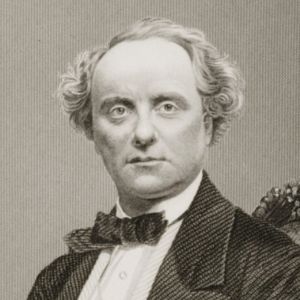
Charles John Kean (1811–1868) was an English actor and theatrical manager, known for his meticulous stage productions of Shakespeare's plays. He was the son of the famous actor Edmund Kean, and although initially overshadowed by his father, Charles gained prominence through his own distinct style and attention to historical accuracy. Kean managed the Princess's Theatre in London from 1850 to 1859, where he staged elaborate productions of "Hamlet," "King Lear," and "Macbeth." His innovations in stage design and use of scenery helped set new standards for theatrical realism in the 19th century.
Author's Books:
Sort by:
PREFACE. In the selection of my last Shakespearean revival at the Princess’s Theatre, I have been actuated by a desire to present some of the finest poetry of our great dramatic master, interwoven with a subject illustrating a most memorable era in English history. No play appears to be better adapted for this two-fold purpose than that which treats of Shakespeare’s favorite hero, and England’s...
more...
ACT I. Various groups of Nobles, Citizens, Merchants, Foreigners, Water-Carriers, Flower Girls, &c., pass and repass. Procession of the Doge, in state, across the square. ANTONIO, SALARINO, and SALANIO come forward. Ant. In sooth, I know not why I am so sad;It wearies me; you say, it wearies you;But how I caught it, found it, or came by it,What stuff 'tis made of, whereof it is born,I am to...
more...

ACT I. Scene I.—ELSINORE. A Platform before the Castle. Night. Francisco on his post. Enter to him Bernardo, L.H. Ber. Who's there? Fran. (R.) Nay, answer me: stand, and unfold yourself. Ber. Long live the king! Fran. Bernardo? Ber. He. Fran. You come most carefully upon your hour. Ber. 'Tis now struck twelve; get thee to bed, Francisco. Fran. For this relief much thanks: [Crosses to L.]...
more...