

Categories
- Antiques & Collectibles 13
- Architecture 36
- Art 48
- Bibles 22
- Biography & Autobiography 815
- Body, Mind & Spirit 145
- Business & Economics 28
- Children's Books 15
- Children's Fiction 12
- Computers 4
- Cooking 94
- Crafts & Hobbies 4
- Drama 346
- Education 63
- Family & Relationships 59
- Fiction 11841
- Foreign Language Study 1
- Games 19
- Gardening 17
- Health & Fitness 35
- History 1382
- House & Home 1
- Humor 147
- Juvenile Fiction 1880
- Juvenile Nonfiction 202
- Language Arts & Disciplines 89
- Law 16
- Literary Collections 687
- Literary Criticism 179
- Mathematics 13
- Medical 43
- Music 40
- Nature 181
- Non-Classifiable 1768
- Performing Arts 7
- Periodicals 1453
- Philosophy 65
- Photography 2
- Poetry 897
- Political Science 205
- Psychology 44
- Reference 154
- Religion 516
- Science 128
- Self-Help 87
- Social Science 83
- Sports & Recreation 34
- Study Aids 3
- Technology & Engineering 60
- Transportation 23
- Travel 463
- True Crime 29
Charles Dudley Warner
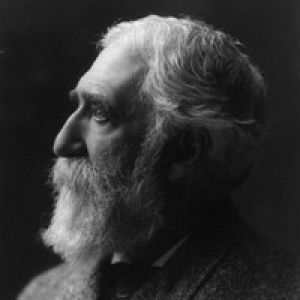
Charles Dudley Warner (1829-1900) was an American essayist, novelist, and editor, best known for his collaboration with Mark Twain on the novel "The Gilded Age: A Tale of Today." He was also a respected literary critic and travel writer, contributing to publications such as Harper's Magazine. Warner's work often reflected his keen observations on society and culture, and he was recognized for his wit and eloquence.
Author's Books:
Sort by:
The Declaration of Independence opens with the statement of a great and fruitful political truth. But if it had said:—"We hold these truths to be self-evident: that all men are created unequal; that they are endowed by their Creator with certain inalienable rights; that among these are life, liberty and the pursuit of happiness," it would also have stated the truth; and if it had added,...
more...
I "The way to mount a horse"—said the Professor. "If you have no ladder—put in the Friend of Humanity." The Professor had ridden through the war for the Union on the right side, enjoying a much better view of it than if he had walked, and knew as much about a horse as a person ought to know for the sake of his character. The man who can recite the tales of the Canterbury Pilgrims,...
more...
The simple story of the life of Pocahontas is sufficiently romantic without the embellishments which have been wrought on it either by the vanity of Captain Smith or the natural pride of the descendants of this dusky princess who have been ennobled by the smallest rivulet of her red blood. That she was a child of remarkable intelligence, and that she early showed a tender regard for the whites and...
more...

Delivered before the Alumni of Hamilton College, Clinton, N. Y., Wednesday, June 26, 1872 Twenty-one years ago in this house I heard a voice calling me to ascend the platform, and there to stand and deliver. The voice was the voice of President North; the language was an excellent imitation of that used by Cicero and Julius Caesar. I remember the flattering invitation—it is the classic tag...
more...
It was near midnight: The company gathered in a famous city studio were under the impression, diligently diffused in the world, that the end of the century is a time of license if not of decadence. The situation had its own piquancy, partly in the surprise of some of those assembled at finding themselves in bohemia, partly in a flutter of expectation of seeing something on the border-line of propriety....
more...
In accordance with the advice of Diogenes of Apollonia in the beginning of his treatise on Natural Philosophy—"It appears to me to be well for every one who commences any sort of philosophical treatise to lay down some undeniable principle to start with"—we offer this: All men are created unequal. It would be a most interesting study to trace the growth in the world of the doctrine of...
more...

CHAPTER I. HOW OUR ITALY IS MADE. The traveller who descends into Italy by an Alpine pass never forgets the surprise and delight of the transition. In an hour he is whirled down the slopes from the region of eternal snow to the verdure of spring or the ripeness of summer. Suddenly—it may be at a turn in the road—winter is left behind; the plains of Lombardy are in view; the Lake of Como or Maggiore...
more...
MISAPPREHENSIONS CORRECTED I should not like to ask an indulgent and idle public to saunter about with me under a misapprehension. It would be more agreeable to invite it to go nowhere than somewhere; for almost every one has been somewhere, and has written about it. The only compromise I can suggest is, that we shall go somewhere, and not learn anything about it. The instinct of the public against any...
more...
Queen Elizabeth being dead about ten o'clock in the morning, March 24, 1603, Sir Robert Cary posted away, unsent, to King James of Scotland to inform him of the "accident," and got made a baron of the realm for his ride. On his way down to take possession of his new kingdom the king distributed the honor of knighthood right and left liberally; at Theobald's he created eight-and-twenty...
more...
This is the first public meeting of the National Institute of Arts and Letters. The original members were selected by an invitation from the American Social Science Association, which acted under the power of its charter from the Congress of the United States. The members thus selected, who joined the Social Science Association, were given the alternative of organizing as an independent institute or as...
more...