

Categories
- Antiques & Collectibles 13
- Architecture 36
- Art 48
- Bibles 22
- Biography & Autobiography 816
- Body, Mind & Spirit 144
- Business & Economics 30
- Children's Books 15
- Children's Fiction 12
- Computers 4
- Cooking 94
- Crafts & Hobbies 4
- Drama 346
- Education 64
- Family & Relationships 59
- Fiction 11841
- Foreign Language Study 2
- Games 19
- Gardening 17
- Health & Fitness 35
- History 1383
- House & Home 1
- Humor 147
- Juvenile Fiction 1884
- Juvenile Nonfiction 202
- Language Arts & Disciplines 89
- Law 16
- Literary Collections 687
- Literary Criticism 179
- Mathematics 13
- Medical 43
- Music 40
- Nature 181
- Non-Classifiable 1768
- Performing Arts 7
- Periodicals 1453
- Philosophy 65
- Photography 2
- Poetry 897
- Political Science 205
- Psychology 44
- Reference 154
- Religion 515
- Science 128
- Self-Help 86
- Social Science 83
- Sports & Recreation 34
- Study Aids 3
- Technology & Engineering 60
- Transportation 23
- Travel 463
- True Crime 29
Carter Godwin Woodson
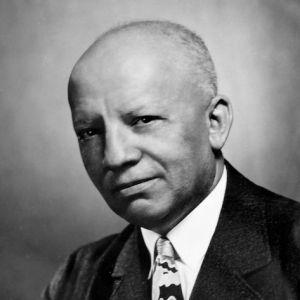
Carter Godwin Woodson (1875–1950) was a prominent African American historian, educator, and author, often regarded as the "Father of Black History." He founded the Association for the Study of African American Life and History (ASALH) in 1915, aiming to promote the study of Black history. In 1926, Woodson launched Negro History Week, which later evolved into Black History Month. Among his notable works is "The Mis-Education of the Negro" (1933), a critique of the American educational system's failure to address the history and contributions of African Americans.
Author's Books:
Sort by:

CHAPTER I INTRODUCTION Brought from the African wilds to constitute the laboring class of a pioneering society in the new world, the heathen slaves had to be trained to meet the needs of their environment. It required little argument to convince intelligent masters that slaves who had some conception of modern civilization and understood the language of their owners would be more valuable than rude men...
more...
CHAPTER I FINDING A PLACE OF REFUGE The migration of the blacks from the Southern States to those offering them better opportunities is nothing new. The objective here, therefore, will be not merely to present the causes and results of the recent movement of the Negroes to the North but to connect this event with the periodical movements of the blacks to that section, from about the year 1815 to the...
more...