

Categories
- Antiques & Collectibles 13
- Architecture 36
- Art 48
- Bibles 22
- Biography & Autobiography 815
- Body, Mind & Spirit 144
- Business & Economics 28
- Children's Books 15
- Children's Fiction 12
- Computers 4
- Cooking 94
- Crafts & Hobbies 4
- Drama 346
- Education 63
- Family & Relationships 59
- Fiction 11841
- Foreign Language Study 1
- Games 19
- Gardening 17
- Health & Fitness 35
- History 1382
- House & Home 1
- Humor 147
- Juvenile Fiction 1877
- Juvenile Nonfiction 202
- Language Arts & Disciplines 89
- Law 16
- Literary Collections 687
- Literary Criticism 179
- Mathematics 13
- Medical 43
- Music 40
- Nature 181
- Non-Classifiable 1768
- Performing Arts 7
- Periodicals 1453
- Philosophy 65
- Photography 2
- Poetry 897
- Political Science 205
- Psychology 44
- Reference 154
- Religion 516
- Science 128
- Self-Help 86
- Social Science 83
- Sports & Recreation 34
- Study Aids 3
- Technology & Engineering 60
- Transportation 23
- Travel 463
- True Crime 29
C. H. (Charles Harold) Herford
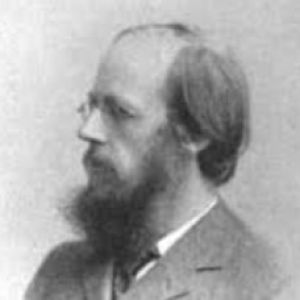
Charles Harold Herford (1853–1931) was a British literary scholar and critic known for his work on English literature, particularly the works of Shakespeare and the Elizabethan period. He is best remembered for his "Eversley Series" edition of Shakespeare's complete works, which included critical essays and annotations. Herford also wrote "The Age of Wordsworth," a study of the Romantic poet and his era, highlighting the influence of nature and emotion in literature. As a professor of English Literature at the University of Manchester, Herford made significant contributions to literary studies and was regarded as an influential educator in his field.
Author's Books:
Sort by:

CHAPTER I. EARLY LIFE. PARACELSUS. The Boy sprang up ... and ran,Stung by the splendour of a sudden thought.— A Death in the Desert. Dass ich erkenne, was die WeltIm Innersten zusammenhält.— Faust. Judged by his cosmopolitan sympathies and his encyclopædic knowledge, by the scenery and the persons among whom his poetry habitually moves, Browning was one of the least insular of English...
more...
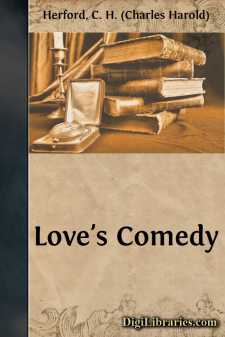
INTRODUCTION* Koerlighedens Komedie was published at Christiania in 1862. The polite world—so far as such a thing existed at the time in the Northern capital—received it with an outburst of indignation now entirely easy to understand. It has indeed faults enough. The character-drawing is often crude, the action, though full of effective by-play, extremely slight, and the sensational climax has...
more...