

Categories
- Antiques & Collectibles 13
- Architecture 36
- Art 48
- Bibles 22
- Biography & Autobiography 816
- Body, Mind & Spirit 145
- Business & Economics 30
- Children's Books 15
- Children's Fiction 12
- Computers 4
- Cooking 94
- Crafts & Hobbies 4
- Drama 346
- Education 64
- Family & Relationships 59
- Fiction 11841
- Foreign Language Study 2
- Games 19
- Gardening 17
- Health & Fitness 35
- History 1383
- House & Home 1
- Humor 147
- Juvenile Fiction 1884
- Juvenile Nonfiction 202
- Language Arts & Disciplines 89
- Law 16
- Literary Collections 687
- Literary Criticism 179
- Mathematics 13
- Medical 43
- Music 40
- Nature 181
- Non-Classifiable 1768
- Performing Arts 7
- Periodicals 1453
- Philosophy 65
- Photography 2
- Poetry 897
- Political Science 205
- Psychology 44
- Reference 154
- Religion 516
- Science 128
- Self-Help 87
- Social Science 83
- Sports & Recreation 34
- Study Aids 3
- Technology & Engineering 60
- Transportation 23
- Travel 463
- True Crime 29
Arthur Christopher Benson
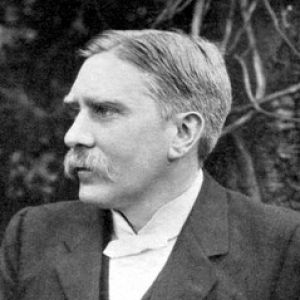
Arthur Christopher Benson (1862–1925) was an English essayist, poet, and academic known for his reflective and introspective writings. He is most famous for his lyric poem "Land of Hope and Glory," which was set to music by Edward Elgar and became an iconic British patriotic song. Benson also served as the Master of Magdalene College, Cambridge, and authored numerous essays and memoirs that explore themes of self-awareness, education, and the beauty of the English countryside.
Author's Books:
Sort by:
THE POINT OF VIEW I have lately come to perceive that the one thing which gives value to any piece of art, whether it be book, or picture, or music, is that subtle and evasive thing which is called personality. No amount of labour, of zest, even of accomplishment, can make up for the absence of this quality. It must be an almost wholly instinctive thing, I believe. Of course, the mere presence of...
more...
CHAPTER I He was born November 2, 1852. He was the second son of a retired cavalry officer, who lived in Hampshire. Besides his elder brother, there were three sisters, one of whom died. His father was a wealthy man, and had built himself a small country house, and planted the few acres of ground round it very skillfully. Major Hamilton was a very religious man, of the self-sufficient, puritanical, and...
more...
I had intended to allow the records that follow—the records of a pilgrimage sorely beset and hampered by sorrow and distress—to speak for themselves. Let me only say that one who makes public a record so intimate and outspoken incurs, as a rule, a certain responsibility. He has to consider in the first place, or at least he cannot help instinctively considering, what the wishes of the writer would...
more...
PREFACE It is a harder thing than it ought to be to write openly and frankly of things private and sacred. "Secretum meum mihi!"—"My secret is my own!"—cried St. Francis in a harrowed moment. But I believe that the instinct to guard and hoard the inner life is one that ought to be resisted. Secrecy seems to me now a very uncivilised kind of virtue, after all! We have all of us, or...
more...
PREFACE These stories were all written at a very happy time of my life, and they were first published when I was a master at Eton with a boarding-house. A house-master is not always a happy man. It is an anxious business at best. Boys are very unaccountable creatures, and the years between boyhood and adolescence are apt to represent an irresponsible mood. From the quiet childhood at home the boys have...
more...
THE SHADOW There surely may come a time for each of us, if we have lived with any animation or interest, if we have had any constant or even fitful desire to penetrate and grasp the significance of the strange adventure of life, a time, I say, when we may look back a little, not sentimentally or with any hope of making out an impressive case for ourselves, and interrogate the memory as to what have...
more...
I HARE STREET How loudly and boisterously the wind roared to-day across the low-hung, cloud-smeared sky, driving the broken rack before it, warm and wet out of the south! What a wintry landscape! leafless trees bending beneath the onset of the wind, bare and streaming hedges, pale close-reaped wheat-fields, brown ploughland, spare pastures stretching away to left and right, softly rising and falling to...
more...
INTRODUCTION I think that a book like the following, which deals with a subject so great and so mysterious as our hope of immortality, by means of an allegory or fantasy, needs a few words of preface, in order to clear away at the outset any misunderstandings which may possibly arise in a reader's mind. Nothing is further from my wish than to attempt any philosophical or ontological exposition of...
more...
THE SILENT ISLE I The Silent Isle, I name it; and yet in no land in which I have ever lived is there so little sight and sound of water as here. It oozes from field to drain, it trickles from drain to ditch, it falls from ditch to dyke, and then moves silently to the great seaward sluice; it is not a living thing in the landscape, bright and vivacious, but rather something secret and still, drawn...
more...
I The bright pale February sunlight lay on the little court of Beaufort College, Cambridge, on the old dull-red smoke-stained brick, the stone mullions and mouldings, the Hall oriel, the ivied buttresses and battlements, the turrets, the tiled roofs, the quaint chimneys, and the lead-topped cupola over all. Half the court was in shadow. It was incredibly picturesque, but it had somehow the look of a...
more...