

Categories
- Antiques & Collectibles 13
- Architecture 36
- Art 48
- Bibles 22
- Biography & Autobiography 815
- Body, Mind & Spirit 145
- Business & Economics 28
- Children's Books 15
- Children's Fiction 12
- Computers 4
- Cooking 94
- Crafts & Hobbies 4
- Drama 346
- Education 63
- Family & Relationships 59
- Fiction 11841
- Foreign Language Study 1
- Games 19
- Gardening 17
- Health & Fitness 35
- History 1382
- House & Home 1
- Humor 147
- Juvenile Fiction 1880
- Juvenile Nonfiction 202
- Language Arts & Disciplines 89
- Law 16
- Literary Collections 687
- Literary Criticism 179
- Mathematics 13
- Medical 43
- Music 40
- Nature 181
- Non-Classifiable 1768
- Performing Arts 7
- Periodicals 1453
- Philosophy 65
- Photography 2
- Poetry 897
- Political Science 205
- Psychology 44
- Reference 154
- Religion 516
- Science 128
- Self-Help 87
- Social Science 83
- Sports & Recreation 34
- Study Aids 3
- Technology & Engineering 60
- Transportation 23
- Travel 463
- True Crime 29
Alexander Pope
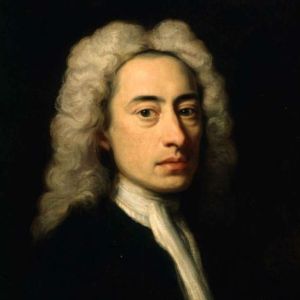
Alexander Pope (1688–1744) was an English poet and satirist, known for his sharp wit, precise use of language, and mastery of the heroic couplet. He is best remembered for his mock-epic poem "The Rape of the Lock" and his translation of Homer's "Iliad" and "Odyssey." His major work, "The Dunciad," satirizes dullness in literature and society. Pope's critical essays, including "An Essay on Criticism" and "An Essay on Man," are also highly regarded for their philosophical insights and aphorisms.
Author's Books:
Sort by:
by:
Alexander Pope
INTRODUCTION Perhaps no other great poet in English Literature has been so differently judged at different times as Alexander Pope. Accepted almost on his first appearance as one of the leading poets of the day, he rapidly became recognized as the foremost man of letters of his age. He held this position throughout his life, and for over half a century after his death his works were considered not only...
more...
by:
Alexander Pope
The reply of Maximilian to the wealthy courtier who tendered him a goodly purse of gold for a title of nobility, was worthy of that emperor: "I can enrich thee," he said, "but only thy own virtue can enoble thee" All true grandeur, excellence, and dignity, are the offspring of virtue. Even the most renowned oracles of paganism proclaim this, and the very persecutors of holiness are...
more...
by:
Alexander Pope
ALEXANDER POPE. This eminent English poet was born in London, May 21, 1688. His parents were Roman Catholics, and to this faith the poet adhered, thus debarring himself from public office and employment. His father, a linen merchant, having saved a moderate competency, withdrew from business, and settled on a small estate he had purchased in Windsor Forest. He died at Chiswick, in 1717. His son shortly...
more...