

Categories
- Antiques & Collectibles 13
- Architecture 36
- Art 48
- Bibles 22
- Biography & Autobiography 816
- Body, Mind & Spirit 145
- Business & Economics 32
- Children's Books 15
- Children's Fiction 13
- Computers 4
- Cooking 94
- Crafts & Hobbies 4
- Drama 346
- Education 64
- Family & Relationships 62
- Fiction 11848
- Foreign Language Study 2
- Games 19
- Gardening 17
- Health & Fitness 36
- History 1383
- House & Home 1
- Humor 147
- Juvenile Fiction 1884
- Juvenile Nonfiction 202
- Language Arts & Disciplines 89
- Law 16
- Literary Collections 687
- Literary Criticism 179
- Mathematics 13
- Medical 43
- Music 40
- Nature 181
- Non-Classifiable 1768
- Performing Arts 7
- Periodicals 1453
- Philosophy 65
- Photography 2
- Poetry 897
- Political Science 206
- Psychology 44
- Reference 154
- Religion 516
- Science 128
- Self-Help 89
- Social Science 84
- Sports & Recreation 34
- Study Aids 3
- Technology & Engineering 60
- Transportation 23
- Travel 463
- True Crime 29
A. C. (Andrew Cecil) Bradley
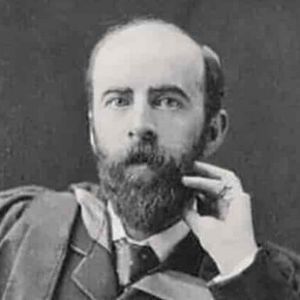
Andrew Cecil Bradley (1851–1935) was a renowned English literary scholar and critic, best known for his work on Shakespearean tragedy. He gained prominence with his influential lectures and books, particularly "Shakespearean Tragedy" (1904), which analyzed the major tragic plays like "Hamlet," "Othello," "King Lear," and "Macbeth." Bradley's approach to Shakespeare focused on psychological depth and character analysis, treating the plays as studies of human emotion and experience. His critical work has shaped modern interpretations of Shakespeare, making him one of the most significant Shakespearean critics of his time.
Author's Books:
Sort by:
LECTURE I THE SUBSTANCE OF SHAKESPEAREAN TRAGEDY The question we are to consider in this lecture may be stated in a variety of ways. We may put it thus: What is the substance of a Shakespearean tragedy, taken in abstraction both from its form and from the differences in point of substance between one tragedy and another? Or thus: What is the nature of the tragic aspect of life as represented by...
more...
POETRY FOR POETRY'S SAKE One who, after twenty years, is restored to the University where he was taught and first tried to teach, and who has received at the hands of his Alma Mater an honour of which he never dreamed, is tempted to speak both of himself and of her. But I remember that you have come to listen to my thoughts about a great subject, and not to my feelings about myself; and, of...
more...