

Categories
- Antiques & Collectibles 13
- Architecture 36
- Art 48
- Bibles 22
- Biography & Autobiography 816
- Body, Mind & Spirit 145
- Business & Economics 32
- Children's Books 15
- Children's Fiction 13
- Computers 4
- Cooking 94
- Crafts & Hobbies 4
- Drama 346
- Education 65
- Family & Relationships 62
- Fiction 11848
- Foreign Language Study 2
- Games 19
- Gardening 17
- Health & Fitness 36
- History 1383
- House & Home 1
- Humor 147
- Juvenile Fiction 1884
- Juvenile Nonfiction 202
- Language Arts & Disciplines 89
- Law 16
- Literary Collections 687
- Literary Criticism 179
- Mathematics 13
- Medical 43
- Music 40
- Nature 181
- Non-Classifiable 1768
- Performing Arts 7
- Periodicals 1453
- Philosophy 65
- Photography 2
- Poetry 898
- Political Science 206
- Psychology 44
- Reference 154
- Religion 516
- Science 128
- Self-Help 89
- Social Science 84
- Sports & Recreation 34
- Study Aids 3
- Technology & Engineering 60
- Transportation 23
- Travel 463
- True Crime 29
William Ware
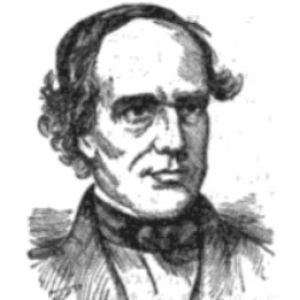
William Ware (1797–1852) was an American writer and Unitarian clergyman, best known for his historical novels set in ancient Rome. His most famous works include "Zenobia; or, The Fall of Palmyra" (1837) and "Aurelian; or, Rome in the Third Century" (1838). Ware's novels, often written in the form of letters, combine historical research with imaginative storytelling, offering vivid depictions of early Christian life and the Roman Empire. His works were influential in popularizing historical fiction in 19th-century America.
Author's Books:
Sort by:

by:
William Ware
Letter I. It is with difficulty that I persuade myself, that it is I who am sitting and writing to you from this great city of the East. Whether I look upon the face of nature, or the works of man, I see every thing different from what the West presents; so widely different, that it seems to me, at times, as if I were subject to the power of a dream. But I rouse myself, and find that I am awake, and...
more...

by:
William Ware
AURELIAN. The record which follows, is by the hand of me, Nicomachus, once the happy servant of the great Queen of Palmyra, than whom the world never saw a queen more illustrious, or a woman adorned with brighter virtues. But my design is not to write her eulogy, or to recite the wonderful story of her life. That task requires a stronger and a more impartial hand than mine. The life of Zenobia by...
more...