

Categories
- Antiques & Collectibles 13
- Architecture 36
- Art 48
- Bibles 22
- Biography & Autobiography 815
- Body, Mind & Spirit 144
- Business & Economics 28
- Children's Books 15
- Children's Fiction 12
- Computers 4
- Cooking 94
- Crafts & Hobbies 4
- Drama 346
- Education 63
- Family & Relationships 59
- Fiction 11841
- Foreign Language Study 1
- Games 19
- Gardening 17
- Health & Fitness 35
- History 1382
- House & Home 1
- Humor 147
- Juvenile Fiction 1877
- Juvenile Nonfiction 202
- Language Arts & Disciplines 89
- Law 16
- Literary Collections 687
- Literary Criticism 179
- Mathematics 13
- Medical 43
- Music 40
- Nature 181
- Non-Classifiable 1768
- Performing Arts 7
- Periodicals 1453
- Philosophy 65
- Photography 2
- Poetry 897
- Political Science 205
- Psychology 44
- Reference 154
- Religion 516
- Science 128
- Self-Help 86
- Social Science 83
- Sports & Recreation 34
- Study Aids 3
- Technology & Engineering 60
- Transportation 23
- Travel 463
- True Crime 29
William Wake
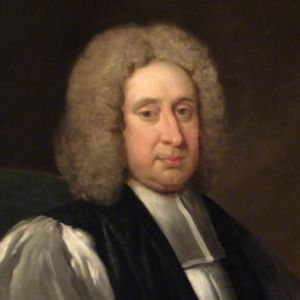
William Wake was an English writer and clergyman who lived from 1657 to 1737. He became the Archbishop of Canterbury in 1716, holding that position until his death. Wake was known for his scholarly works, particularly in ecclesiastical history, and he translated several early Christian texts, including "The Genuine Epistles of the Apostolical Fathers." His writings and leadership had a lasting impact on the Church of England, especially in matters of church governance and relations with the Protestant churches of Europe.
Author's Books:
Sort by:
by:
William Wake
216 And some of them being teachers have preached and taught purely and sincerely, and have not in the least yielded to any evil, desires, but have constantly walked in righteousness and truth. 217 These therefore have their conversations among the angels. 218 Again; as for what concerns the ninth mountain which is a desert, and full of serpents; they are such as have believed, but had many stains: 219...
more...
by:
William Wake
To uphold the "right of private judgment," and our "Christian liberty wherewith Christ hath made us free;" to add fuel to the fire of investigation, and in the crucible of deep inquiry, melt from the gold of pure religion, the dross of man's invention; to appeal from the erring tribunals of a fallible Priesthood, and restore to its original state the mutilated Testament of the...
more...