

Categories
- Antiques & Collectibles 13
- Architecture 36
- Art 48
- Bibles 22
- Biography & Autobiography 816
- Body, Mind & Spirit 145
- Business & Economics 32
- Children's Books 15
- Children's Fiction 13
- Computers 4
- Cooking 94
- Crafts & Hobbies 4
- Drama 346
- Education 65
- Family & Relationships 62
- Fiction 11845
- Foreign Language Study 2
- Games 19
- Gardening 17
- Health & Fitness 36
- History 1383
- House & Home 1
- Humor 147
- Juvenile Fiction 1884
- Juvenile Nonfiction 202
- Language Arts & Disciplines 89
- Law 16
- Literary Collections 687
- Literary Criticism 179
- Mathematics 13
- Medical 43
- Music 40
- Nature 181
- Non-Classifiable 1768
- Performing Arts 7
- Periodicals 1453
- Philosophy 65
- Photography 2
- Poetry 898
- Political Science 206
- Psychology 44
- Reference 154
- Religion 516
- Science 128
- Self-Help 89
- Social Science 84
- Sports & Recreation 34
- Study Aids 3
- Technology & Engineering 60
- Transportation 23
- Travel 463
- True Crime 29
William Ralph Inge
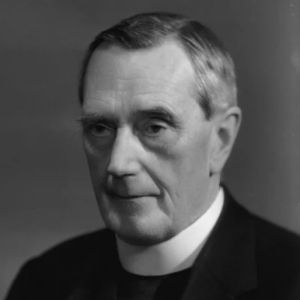
William Ralph Inge (1860–1954) was an English author, Anglican priest, and influential theologian known as "The Gloomy Dean" for his pessimistic views on modern society. He served as Dean of St. Paul's Cathedral in London from 1911 to 1934. Inge wrote extensively on religion, mysticism, and philosophy, with notable works including "Christian Mysticism" and "The Philosophy of Plotinus." His writings often critiqued materialism and secularism, advocating instead for a return to spiritual values and inner contemplation.
Author's Books:
Sort by:
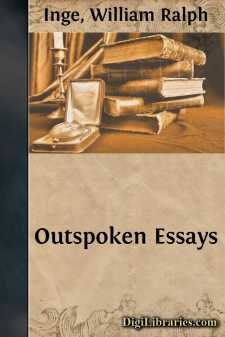
(AUGUST, 1919) The Essays in this volume were written at various times before and during the Great War. In reading them through for republication, I have to ask myself whether my opinions on social science and on the state of religion, the two subjects which are mainly dealt with in this collection, have been modified by the greatest calamity which has ever befallen the civilised world, or by the issue...
more...
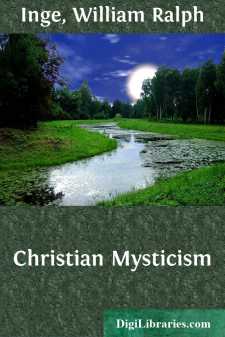
LECTURE I [Greek: "Hêmin de apodeikteon hôs ep' eutuchia tê megistê para Theôn hê toiautê mania didotai hê de dê apodeixis estai deinois men apistos, sophois de pistê"] PLATO, Phædrus, p. 245. "Thoas. Es spricht kein Gott; es spricht dein eignes Herz. Iphigenia. Sie reden nur durch unser Herz zu uns." GOETHE, Iphigenie. "Si notre vie est moins qu'une...
more...