

Categories
- Antiques & Collectibles 13
- Architecture 36
- Art 48
- Bibles 22
- Biography & Autobiography 815
- Body, Mind & Spirit 145
- Business & Economics 28
- Children's Books 15
- Children's Fiction 12
- Computers 4
- Cooking 94
- Crafts & Hobbies 4
- Drama 346
- Education 63
- Family & Relationships 59
- Fiction 11841
- Foreign Language Study 1
- Games 19
- Gardening 17
- Health & Fitness 35
- History 1382
- House & Home 1
- Humor 147
- Juvenile Fiction 1884
- Juvenile Nonfiction 202
- Language Arts & Disciplines 89
- Law 16
- Literary Collections 687
- Literary Criticism 179
- Mathematics 13
- Medical 43
- Music 40
- Nature 181
- Non-Classifiable 1768
- Performing Arts 7
- Periodicals 1453
- Philosophy 65
- Photography 2
- Poetry 897
- Political Science 205
- Psychology 44
- Reference 154
- Religion 516
- Science 128
- Self-Help 87
- Social Science 83
- Sports & Recreation 34
- Study Aids 3
- Technology & Engineering 60
- Transportation 23
- Travel 463
- True Crime 29
William Hickling Prescott
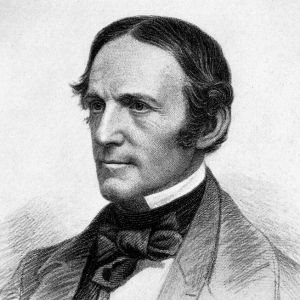
William Hickling Prescott (1796-1859) was an American historian renowned for his works on the Spanish conquests in the Americas. Despite losing much of his eyesight early in life, he authored influential books such as "History of the Conquest of Mexico" (1843) and "History of the Conquest of Peru" (1847), which are celebrated for their scholarly rigor and engaging narrative style. Prescott is often regarded as one of the first American scientific historians due to his meticulous research and use of primary sources.
Author's Books:
Sort by:

INTERNAL AFFAIRS OF THE KINGDOM.—INQUISITION IN ARAGON. 1483-1487. Isabella enforces the Laws.—Punishment of Ecclesiastics.—Inquisition inAragon.—Remonstrances of the Cortes.—Conspiracy.—Assassination of theInquisitor Arbues.—Cruel Persecutions.—Inquisition throughoutFerdinand's Dominions. In such intervals of leisure as occurred amid their military operations, Ferdinand and...
more...
The reign of Philip the Second has occupied the pen of the historian more frequently—if we except that of Charles the Fifth—than any other portion of the Spanish annals. It has become familiar to the English reader through the pages of Watson, who has deservedly found favor with the public for the perspicuity of his style,—a virtue, however, not uncommon in his day,—for the sobriety of his...
more...

CHAPTER I. THE MOORS OF SPAIN. Conquest of Spain by the Arabs.—Slow Recovery by the Spaniards.—Efforts to convert the Moslems.—Their Homes in the Alpujarras.—Their Treatment by the Government.—The Minister Espinosa.—Edict against the Moriscoes.—Their ineffectual Remonstrance. 1566, 1567. It was in the beginning of the eighth century, in the year 711, that the Arabs, filled with the spirit...
more...

ITALIAN WARS.—PARTITION OF NAPLES.—GONSALVO OVERRUNS CALABRIA. 1498-1502. Louis XII.'s Designs on Italy.—Alarm of the Spanish Court.—Bold Conduct of its Minister at Rome.—Celebrated Partition of Naples.—Gonsalvo Sails against the Turks.—Success and Cruelties of the French.—Gonsalvo Invades Calabria.—He Punishes a Mutiny.—His Munificent Spirit.—He Captures Tarento.—Seizes...
more...

English writers have done more for the illustration of Spanish history, than for that of any other except their own. To say nothing of the recent general compendium, executed for the "Cabinet Cyclopaedia," a work of singular acuteness and information, we have particular narratives of the several reigns, in an unbroken series, from the emperor Charles the Fifth (the First of Spain) to Charles...
more...
The great nobles of Peru were allowed, like their sovereign, a plurality of wives. The people, generally, whether by law, or by necessity stronger than law, were more happily limited to one. Marriage was conducted in a manner that gave it quite as original a character as belonged to the other institutions of the country. On an appointed day of the year, all those of a marriageable age - which, having...
more...