

Categories
- Antiques & Collectibles 13
- Architecture 36
- Art 48
- Bibles 22
- Biography & Autobiography 815
- Body, Mind & Spirit 144
- Business & Economics 28
- Children's Books 15
- Children's Fiction 12
- Computers 4
- Cooking 94
- Crafts & Hobbies 4
- Drama 346
- Education 63
- Family & Relationships 59
- Fiction 11839
- Foreign Language Study 1
- Games 19
- Gardening 17
- Health & Fitness 35
- History 1382
- House & Home 1
- Humor 147
- Juvenile Fiction 1877
- Juvenile Nonfiction 202
- Language Arts & Disciplines 89
- Law 16
- Literary Collections 687
- Literary Criticism 179
- Mathematics 13
- Medical 43
- Music 40
- Nature 181
- Non-Classifiable 1768
- Performing Arts 7
- Periodicals 1453
- Philosophy 65
- Photography 2
- Poetry 897
- Political Science 205
- Psychology 44
- Reference 154
- Religion 516
- Science 128
- Self-Help 86
- Social Science 83
- Sports & Recreation 34
- Study Aids 3
- Technology & Engineering 60
- Transportation 23
- Travel 463
- True Crime 29
William Harrison Ainsworth
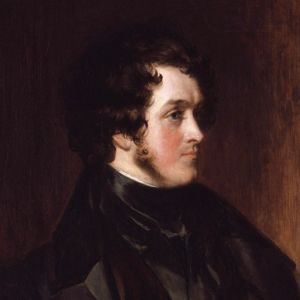
William Harrison Ainsworth (1805–1882) was an English historical novelist known for his vivid and dramatic tales set in various periods of English history. He achieved significant popularity with his novel "Rookwood" in 1834, which featured the legendary highwayman Dick Turpin. Ainsworth's works, characterized by their rich historical detail and engaging plots, contributed to the popularity of the historical novel genre in the 19th century.
Author's Books:
Sort by:
MEMOIR William Harrison Ainsworth was born in King Street, Manchester, February 4, 1805, in a house that has long since been demolished. His father was a solicitor in good practice, and the son had all the advantages that educational facilities could afford. He was sent to the Manchester grammar-school, and in one of his early novels has left an interesting and accurate picture of its then condition,...
more...

CHAPTER I. The Widow and her Child. On the night of Friday, the 26th of November, 1703, and at the hour of eleven, the door of a miserable habitation, situated in an obscure quarter of the Borough of Southwark, known as the Old Mint, was opened; and a man, with a lantern in his hand, appeared at the threshold. This person, whose age might be about forty, was attired in a brown double-breasted frieze...
more...
Of the Earl of Surrey's solitary Ramble in the Home Park—Ofthe Vision beheld by him in the Haunted Dell—And of hisMeeting with Morgan Fenwolf, the Keeper, beneath Herne'sOak. In the twentieth year of the reign of the right high and puissant King Henry the Eighth, namely, in 1529, on the 21st of April, and on one of the loveliest evenings that ever fell on the loveliest district in...
more...

I. THE GROCER OF WOOD-STREET AND HIS FAMILY. One night, at the latter end of April, 1665, the family of a citizen of London carrying on an extensive business as a grocer in Wood-street, Cheapside, were assembled, according to custom, at prayer. The grocer's name was Stephen Bloundel. His family consisted of his wife, three sons, and two daughters. He had, moreover, an apprentice; an elderly female...
more...

INTRODUCTION. The Last Abbot of Whalley. There were eight watchers by the beacon on Pendle Hill in Lancashire. Two were stationed on either side of the north-eastern extremity of the mountain. One looked over the castled heights of Clithero; the woody eminences of Bowland; the bleak ridges of Thornley; the broad moors of Bleasdale; the Trough of Bolland, and Wolf Crag; and even brought within his ken...
more...

CHAPTER I. The Three Cranes in the Vintry. Adjoining the Vintry Wharf, and at the corner of a narrow lane communicating with Thames Street, there stood, in the early part of the Seventeenth Century, a tavern called the Three Cranes. This old and renowned place of entertainment had then been in existence more than two hundred years, though under other designations. In the reign of Richard II., when it...
more...