

Categories
- Antiques & Collectibles 13
- Architecture 36
- Art 48
- Bibles 22
- Biography & Autobiography 815
- Body, Mind & Spirit 144
- Business & Economics 28
- Children's Books 15
- Children's Fiction 12
- Computers 4
- Cooking 94
- Crafts & Hobbies 4
- Drama 346
- Education 63
- Family & Relationships 59
- Fiction 11841
- Foreign Language Study 1
- Games 19
- Gardening 17
- Health & Fitness 35
- History 1382
- House & Home 1
- Humor 147
- Juvenile Fiction 1877
- Juvenile Nonfiction 202
- Language Arts & Disciplines 89
- Law 16
- Literary Collections 687
- Literary Criticism 179
- Mathematics 13
- Medical 43
- Music 40
- Nature 181
- Non-Classifiable 1768
- Performing Arts 7
- Periodicals 1453
- Philosophy 65
- Photography 2
- Poetry 897
- Political Science 205
- Psychology 44
- Reference 154
- Religion 516
- Science 128
- Self-Help 86
- Social Science 83
- Sports & Recreation 34
- Study Aids 3
- Technology & Engineering 60
- Transportation 23
- Travel 463
- True Crime 29
William Ernest Henley
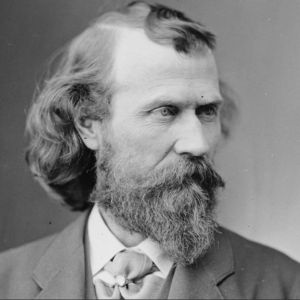
William Ernest Henley (1849–1903) was an English poet, critic, and editor, best known for his poem "Invictus," which he wrote while suffering from tuberculosis. Despite battling illness for much of his life, Henley maintained a powerful spirit, reflected in the defiant tone of "Invictus." He worked as an editor for several literary magazines, where he helped to shape the careers of notable writers like Rudyard Kipling and H.G. Wells. Henley also collaborated with Robert Louis Stevenson, and his robust personality is said to have inspired the character of Long John Silver in Stevenson's novel "Treasure Island."
Author's Books:
Sort by:
The Sword Singing— The voice of the Sword from the heart of the Sword Clanging imperious Forth from Time’s battlements His ancient and triumphing Song. In the beginning,Ere God inspired HimselfInto the clay thingThumbed to His image,The vacant, the naked shellSoon to be Man:Thoughtful He pondered it,Prone there and impotent,Fragile, invitingAttack and discomfiture:Then, with a smile—As He heard...
more...
DICKENS A ‘Frightful Minus’ Mr. Andrew Lang is delightfully severe on those who ‘cannot read Dickens,’ but in truth it is only by accident that he is not himself of that unhappy persuasion. For Dickens the humourist he has a most uncompromising enthusiasm; for Dickens the artist in drama and romance he has as little sympathy as the most practical. Of the prose of David Copperfield and Our...
more...
1. HAWTHORN AND LAVENDER ENVOY My songs were once of the sunrise: They shouted it over the bar; First-footing the dawns, they flourished, And flamed with the morning star. My songs are now of the sunset: Their brows are touched with light, But their feet are lost in the shadows And wet with the dews of night. Yet for the joy in their making Take them, O fond and true, And for...
more...