

Categories
- Antiques & Collectibles 13
- Architecture 36
- Art 48
- Bibles 22
- Biography & Autobiography 815
- Body, Mind & Spirit 145
- Business & Economics 28
- Children's Books 15
- Children's Fiction 12
- Computers 4
- Cooking 94
- Crafts & Hobbies 4
- Drama 346
- Education 63
- Family & Relationships 59
- Fiction 11841
- Foreign Language Study 1
- Games 19
- Gardening 17
- Health & Fitness 35
- History 1382
- House & Home 1
- Humor 147
- Juvenile Fiction 1880
- Juvenile Nonfiction 202
- Language Arts & Disciplines 89
- Law 16
- Literary Collections 687
- Literary Criticism 179
- Mathematics 13
- Medical 43
- Music 40
- Nature 181
- Non-Classifiable 1768
- Performing Arts 7
- Periodicals 1453
- Philosophy 65
- Photography 2
- Poetry 897
- Political Science 205
- Psychology 44
- Reference 154
- Religion 516
- Science 128
- Self-Help 87
- Social Science 83
- Sports & Recreation 34
- Study Aids 3
- Technology & Engineering 60
- Transportation 23
- Travel 463
- True Crime 29
W. (William) Stebbing
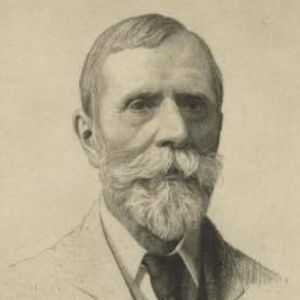
William Stebbing (1832–1926) was a British journalist, essayist, and editor, known for his scholarly work and contributions to literature. He edited the "Quarterly Review" and contributed to the "Times", establishing himself as a prominent figure in 19th-century British journalism. Stebbing authored several works, including "Sir Walter Ralegh: A Biography" and "Five Centuries of English Verse." His writings often focused on literary history, biography, and political commentary, reflecting his deep engagement with English literature and culture.
Author's Books:
Sort by:
CHAPTER I. ON THE NECESSITY OF COMMENCING WITH AN ANALYSIS OF LANGUAGE IN LOGIC. The fact of Logic being a portion of the art of thinking, and of thought's chief instrument being words, is one reason why we must first inquire into the right use of words. But further, the import of propositions cannot really be examined apart from that of words; and (since whatever can be an object of belief...
more...
PREFACE Students of Ralegh's career cannot complain of a dearth of materials. For thirty-seven years he lived in the full glare of publicity. The social and political literature of more than a generation abounds in allusions to him. He appears and reappears continually in the correspondence of Burleigh, Robert Cecil, Christopher Hatton, Essex, Anthony Bacon, Henry Sidney, Richard Boyle, Ralph...
more...