

Categories
- Antiques & Collectibles 13
- Architecture 36
- Art 48
- Bibles 22
- Biography & Autobiography 815
- Body, Mind & Spirit 145
- Business & Economics 28
- Children's Books 15
- Children's Fiction 12
- Computers 4
- Cooking 94
- Crafts & Hobbies 4
- Drama 346
- Education 63
- Family & Relationships 59
- Fiction 11841
- Foreign Language Study 1
- Games 19
- Gardening 17
- Health & Fitness 35
- History 1382
- House & Home 1
- Humor 147
- Juvenile Fiction 1880
- Juvenile Nonfiction 202
- Language Arts & Disciplines 89
- Law 16
- Literary Collections 687
- Literary Criticism 179
- Mathematics 13
- Medical 43
- Music 40
- Nature 181
- Non-Classifiable 1768
- Performing Arts 7
- Periodicals 1453
- Philosophy 65
- Photography 2
- Poetry 897
- Political Science 205
- Psychology 44
- Reference 154
- Religion 516
- Science 128
- Self-Help 87
- Social Science 83
- Sports & Recreation 34
- Study Aids 3
- Technology & Engineering 60
- Transportation 23
- Travel 463
- True Crime 29
W. P. (William Paton) Ker
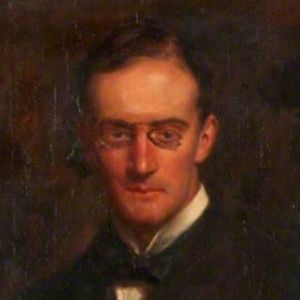
William Paton Ker (1855–1923) was a Scottish literary scholar and essayist, known for his work in medieval and Renaissance literature. He was a professor at University College London and later at the University of Oxford, where he significantly influenced the study of English literature. Some of his notable works include "The Dark Ages" and "Epic and Romance," which explore the development of literature in early Europe. Ker was admired for his scholarly depth and his ability to make complex literary history accessible to a broader audience.
Author's Books:
Sort by:
POSTSCRIPT This book is now reprinted without addition or change, except in a few small details. If it had to be written over again, many things, no doubt, would be expressed in a different way. For example, after some time happily spent in reading the Danish and other ballads, I am inclined to make rather less of the interval between the ballads and the earlier heroic poems, and I have learned...
more...
Sir Walter Scott When I was asked to choose a subject for a lecture at the Sorbonne, there came into my mind somehow or other the incident of Scott's visit to Paris when he went to see Ivanhoe at the Odéon, and was amused to think how the story had travelled and made its fortune:— 'It was an opera, and, of course, the story sadly mangled and the dialogue in great part nonsense. Yet it was...
more...