

Categories
- Antiques & Collectibles 13
- Architecture 36
- Art 48
- Bibles 22
- Biography & Autobiography 815
- Body, Mind & Spirit 144
- Business & Economics 28
- Children's Books 15
- Children's Fiction 12
- Computers 4
- Cooking 94
- Crafts & Hobbies 4
- Drama 346
- Education 63
- Family & Relationships 59
- Fiction 11841
- Foreign Language Study 1
- Games 19
- Gardening 17
- Health & Fitness 35
- History 1382
- House & Home 1
- Humor 147
- Juvenile Fiction 1877
- Juvenile Nonfiction 202
- Language Arts & Disciplines 89
- Law 16
- Literary Collections 687
- Literary Criticism 179
- Mathematics 13
- Medical 43
- Music 40
- Nature 181
- Non-Classifiable 1768
- Performing Arts 7
- Periodicals 1453
- Philosophy 65
- Photography 2
- Poetry 897
- Political Science 205
- Psychology 44
- Reference 154
- Religion 516
- Science 128
- Self-Help 86
- Social Science 83
- Sports & Recreation 34
- Study Aids 3
- Technology & Engineering 60
- Transportation 23
- Travel 463
- True Crime 29
W. J. (William James) Beal
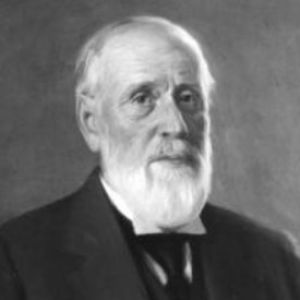
William James Beal (1833–1924) was an American botanist and educator known for his pioneering work in agricultural science and botany. He is best remembered for initiating one of the longest-running seed viability experiments, which is still ongoing today. Beal also wrote several influential books, including "The New Botany" and "Grasses of North America," which contributed to advances in botany and plant breeding. As a professor at Michigan Agricultural College (now Michigan State University), he played a key role in shaping agricultural education in the United States.
Author's Books:
Sort by:
The designer of this bulletin first had in mind something of the sort for the use of his students, not only the undergraduates, but others living on farms, or teaching in Michigan and elsewhere. Whoever grows seeds to sell, or buys seeds to sow, should be benefited by consulting the illustrations which are unsurpassed for accuracy by anything in this country. They were all made by Mr. F. H. Hillman. A...
more...
CHAPTER I.HOW ANIMALS GET ABOUT. 1. Most of the larger animals move about freely.—When danger threatens, the rabbit bounds away in long jumps, seeking protection in a hollow tree, a log, or a hole in the ground. When food becomes scarce, squirrels quickly shift to new regions. Coons, bears, skunks, and porcupines move from one neighborhood to another. When the thickets disappear and hunters abound,...
more...