

Categories
- Antiques & Collectibles 13
- Architecture 36
- Art 48
- Bibles 22
- Biography & Autobiography 815
- Body, Mind & Spirit 144
- Business & Economics 28
- Children's Books 15
- Children's Fiction 12
- Computers 4
- Cooking 94
- Crafts & Hobbies 4
- Drama 346
- Education 63
- Family & Relationships 59
- Fiction 11839
- Foreign Language Study 1
- Games 19
- Gardening 17
- Health & Fitness 35
- History 1382
- House & Home 1
- Humor 147
- Juvenile Fiction 1877
- Juvenile Nonfiction 202
- Language Arts & Disciplines 89
- Law 16
- Literary Collections 687
- Literary Criticism 179
- Mathematics 13
- Medical 43
- Music 40
- Nature 181
- Non-Classifiable 1768
- Performing Arts 7
- Periodicals 1453
- Philosophy 65
- Photography 2
- Poetry 897
- Political Science 205
- Psychology 44
- Reference 154
- Religion 516
- Science 128
- Self-Help 86
- Social Science 83
- Sports & Recreation 34
- Study Aids 3
- Technology & Engineering 60
- Transportation 23
- Travel 463
- True Crime 29
Thomas Paine
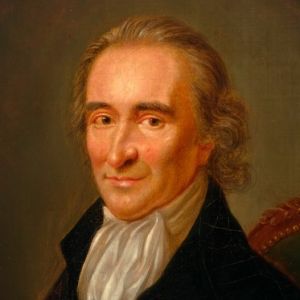
Thomas Paine was an influential English-American writer and political philosopher, best known for his works advocating independence and democracy. His pamphlet "Common Sense" (1776) played a crucial role in galvanizing support for the American Revolution. In "The Rights of Man" (1791), he defended the principles of the French Revolution and argued for the protection of individual rights. Paine's "The Age of Reason" (1794) criticized organized religion and promoted deism, making him a key figure in the development of Enlightenment ideas.
Author's Books:
Sort by:

by:
Thomas Paine
INTRODUCTION A London translation of an original work in French, by the Abbe Raynal, which treats of the Revolution of North America, having been reprinted in Philadelphia and other parts of the continent, and as the distance at which the Abbe is placed from the American theatre of war and politics, has occasioned him to mistake several facts, or misconceive the causes or principles by which they were...
more...
by:
Thomas Paine
SOME writers have so confounded society with government, as to leave little or no distinction between them; whereas they are not only different, but have different origins. Society is produced by our wants, and government by wickedness; the former promotes our happiness POSITIVELY by uniting our affections, the latter NEGATIVELY by restraining our vices. The one encourages intercourse, the other...
more...