

Categories
- Antiques & Collectibles 13
- Architecture 36
- Art 48
- Bibles 22
- Biography & Autobiography 813
- Body, Mind & Spirit 142
- Business & Economics 28
- Children's Books 17
- Children's Fiction 14
- Computers 4
- Cooking 94
- Crafts & Hobbies 4
- Drama 346
- Education 46
- Family & Relationships 57
- Fiction 11829
- Games 19
- Gardening 17
- Health & Fitness 34
- History 1377
- House & Home 1
- Humor 147
- Juvenile Fiction 1873
- Juvenile Nonfiction 202
- Language Arts & Disciplines 88
- Law 16
- Literary Collections 686
- Literary Criticism 179
- Mathematics 13
- Medical 41
- Music 40
- Nature 179
- Non-Classifiable 1768
- Performing Arts 7
- Periodicals 1453
- Philosophy 64
- Photography 2
- Poetry 896
- Political Science 203
- Psychology 42
- Reference 154
- Religion 513
- Science 126
- Self-Help 84
- Social Science 81
- Sports & Recreation 34
- Study Aids 3
- Technology & Engineering 59
- Transportation 23
- Travel 463
- True Crime 29
Thomas Carlyle
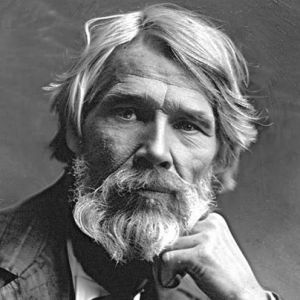
Thomas Carlyle was a Scottish philosopher, satirical writer, essayist, historian, and teacher known for his complex and vivid prose. Born on December 4, 1795, in Ecclefechan, Scotland, he became a leading figure in the Victorian era with works like "Sartor Resartus" and "The French Revolution: A History." Carlyle's writings often delved into themes of heroism, social critique, and the importance of strong leadership.
Author's Books:
Sort by:
by:
Thomas Carlyle
CHAPTER I. MIDAS. The condition of England, on which many pamphlets are now in the course of publication, and many thoughts unpublished are going on in every reflective head, is justly regarded as one of the most ominous, and withal one of the strangest, ever seen in this world. England is full of wealth, of multifarious produce, supply for human want in every kind; yet England is dying of inanition....
more...
by:
Thomas Carlyle
Chapter I. — OF SCHLESIEN, OR SILESIA. Schlesien, what we call Silesia, lies in elliptic shape, spread on the top of Europe, partly girt with mountains, like the crown or crest to that part of the Earth;—highest table-land of Germany or of the Cisalpine Countries; and sending rivers into all the seas. The summit or highest level of it is in the southwest; longest diameter is from northwest to...
more...
by:
Thomas Carlyle
Chapter I.—THE CAMPAIGN OPENS. Seldom was there seen such a combination against any man as this against Friedrich, after his Saxon performances in 1756. The extent of his sin, which is now ascertained to have been what we saw, was at that time considered to transcend all computation, and to mark him out for partition, for suppression and enchainment, as the general enemy of mankind. "Partition...
more...
by:
Thomas Carlyle
NO. I. THE PRESENT TIME. [February 1, 1850.] The Present Time, youngest-born of Eternity, child and heir of all the Past Times with their good and evil, and parent of all the Future, is ever a "New Era" to the thinking man; and comes with new questions and significance, however commonplace it look: to know it, and what it bids us do, is ever the sum of knowledge for all of us. This new Day,...
more...
by:
Thomas Carlyle
Chapter I.—WHAT FRIEDRICH HAD READ IN THE MENZEL DOCUMENTS. The ill-informed world, entirely unaware of what Friedrich had been studying and ascertaining, to his bitter sorrow, for four years past, was extremely astonished at the part he took in those French-English troubles; extremely provoked at his breaking out again into a Third Silesian War, greater than all the others, and kindling all Europe...
more...
by:
Thomas Carlyle
Chapter I. — ENGLAND SENDS THE EXCELLENCY HOTHAM TO BERLIN. Things, therefore, are got to a dead-lock at Berlin: rebellious Womankind peremptorily refuse Weissenfels, and take to a bed of sickness; inexpugnable there, for the moment. Baireuth is but a weak middle term; and there are disagreements on it. Answer from England, affirmative or even negative, we have yet none. Promptly affirmative, that...
more...

by:
Thomas Carlyle
CHAPTER I. — CHILDHOOD: DOUBLE EDUCATIONAL ELEMENT. Of Friedrich's childhood, there is not, after all our reading, much that it would interest the English public to hear tell of. Perhaps not much of knowable that deserves anywhere to be known. Books on it, expressly handling it, and Books on Friedrich Wilhelm's Court and History, of which it is always a main element, are not wanting: but...
more...
by:
Thomas Carlyle
I. Emerson to Carlyle Boston, Massachusetts, 14 May, 1884 My Dear Sir,—There are some purposes we delay long to execute simply because we have them more at heart than others, and such an one has been for many weeks, I may say months, my design of writing you an epistle. Some chance wind of Fame blew your name to me, perhaps two years ago, as the author of papers which I had already distinguished (as...
more...
by:
Thomas Carlyle
CHAPTER I. INTRODUCTORY. Near seven years ago, a short while before his death in 1844, John Sterling committed the care of his literary Character and printed Writings to two friends, Archdeacon Hare and myself. His estimate of the bequest was far from overweening; to few men could the small sum-total of his activities in this world seem more inconsiderable than, in those last solemn days, it did to...
more...

by:
Thomas Carlyle
CHAPTER I. PRELIMINARY. Considering our present advanced state of culture, and how the Torch of Science has now been brandished and borne about, with more or less effect, for five thousand years and upwards; how, in these times especially, not only the Torch still burns, and perhaps more fiercely than ever, but innumerable Rushlights, and Sulphur-matches, kindled thereat, are also glancing in every...
more...