

Categories
- Antiques & Collectibles 13
- Architecture 36
- Art 48
- Bibles 22
- Biography & Autobiography 816
- Body, Mind & Spirit 144
- Business & Economics 30
- Children's Books 15
- Children's Fiction 12
- Computers 4
- Cooking 94
- Crafts & Hobbies 4
- Drama 346
- Education 64
- Family & Relationships 59
- Fiction 11841
- Foreign Language Study 2
- Games 19
- Gardening 17
- Health & Fitness 35
- History 1383
- House & Home 1
- Humor 147
- Juvenile Fiction 1884
- Juvenile Nonfiction 202
- Language Arts & Disciplines 89
- Law 16
- Literary Collections 687
- Literary Criticism 179
- Mathematics 13
- Medical 43
- Music 40
- Nature 181
- Non-Classifiable 1768
- Performing Arts 7
- Periodicals 1453
- Philosophy 65
- Photography 2
- Poetry 897
- Political Science 205
- Psychology 44
- Reference 154
- Religion 515
- Science 128
- Self-Help 86
- Social Science 83
- Sports & Recreation 34
- Study Aids 3
- Technology & Engineering 60
- Transportation 23
- Travel 463
- True Crime 29
Thomas Carlyle
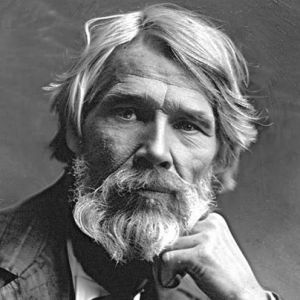
Thomas Carlyle was a Scottish philosopher, satirical writer, essayist, historian, and teacher known for his complex and vivid prose. Born on December 4, 1795, in Ecclefechan, Scotland, he became a leading figure in the Victorian era with works like "Sartor Resartus" and "The French Revolution: A History." Carlyle's writings often delved into themes of heroism, social critique, and the importance of strong leadership.
Author's Books:
Sort by:

by:
Thomas Carlyle
CHAPTER I. PRELIMINARY. Considering our present advanced state of culture, and how the Torch of Science has now been brandished and borne about, with more or less effect, for five thousand years and upwards; how, in these times especially, not only the Torch still burns, and perhaps more fiercely than ever, but innumerable Rushlights, and Sulphur-matches, kindled thereat, are also glancing in every...
more...
by:
Thomas Carlyle
LECTURES ON HEROES. LECTURE I. THE HERO AS DIVINITY. ODIN. PAGANISM: SCANDINAVIAN MYTHOLOGY. [May 5, 1840.] We have undertaken to discourse here for a little on Great Men, their manner of appearance in our world's business, how they have shaped themselves in the world's history, what ideas men formed of them, what work they did;—on Heroes, namely, and on their reception and performance;...
more...
by:
Thomas Carlyle
Chapter I.—SANS-SOUCI. Friedrich has now climbed the heights, and sees himself on the upper table-land of Victory and Success; his desperate life-and-death struggles triumphantly ended. What may be ahead, nobody knows; but here is fair outlook that his enemies and Austria itself have had enough of him. No wringing of his Silesia from this "bad Man." Not to be overset, this one, by never such...
more...

by:
Thomas Carlyle
CHAPTER I. MIDAS. The condition of England, on which many pamphlets are now in the course of publication, and many thoughts unpublished are going on in every reflective head, is justly regarded as one of the most ominous, and withal one of the strangest, ever seen in this world. England is full of wealth, of multifarious produce, supply for human want in every kind; yet England is dying of inanition....
more...
by:
Thomas Carlyle
Chapter I.—THE CAMPAIGN OPENS. Seldom was there seen such a combination against any man as this against Friedrich, after his Saxon performances in 1756. The extent of his sin, which is now ascertained to have been what we saw, was at that time considered to transcend all computation, and to mark him out for partition, for suppression and enchainment, as the general enemy of mankind. "Partition...
more...
by:
Thomas Carlyle
NO. I. THE PRESENT TIME. [February 1, 1850.] The Present Time, youngest-born of Eternity, child and heir of all the Past Times with their good and evil, and parent of all the Future, is ever a "New Era" to the thinking man; and comes with new questions and significance, however commonplace it look: to know it, and what it bids us do, is ever the sum of knowledge for all of us. This new Day,...
more...
by:
Thomas Carlyle
Chapter I.—PRELIMINARIES TO A FOURTH CAMPAIGN. The posting of the Five Armies this Winter—Five of them in Germany, not counting the Russians, who have vanished to Cimmeria over the horizon, for their months of rest—is something wonderful, and strikes the picturesque imagination. Such a Chain of Posts, for length, if for nothing else! From the centre of Bohemia eastward, Daun's Austrians are...
more...
by:
Thomas Carlyle
Chapter I. — BRITANNIC MAJESTY AS PALADIN OF THE PRAGMATIC. Part, is now perhaps conceivable to readers. But as to the Second, the Germanic or Pragmatic Part,—articulate History, after much consideration, is content to renounce attempting these; feels that these will remain forever inconceivable to mankind in the now altered times. So small a gentleman; and he feels, dismally though with heroism,...
more...
by:
Thomas Carlyle
Chapter I. — CHAPLAIN MULLER WAITS ON THE CROWN-PRINCE. Friedrich's feelings at this juncture are not made known to us by himself in the least; or credibly by others in any considerable degree. As indeed in these confused Prussian History-Books, copulent in nugatory pedantisms and learned marine-stores, all that is human remains distressingly obscure to us; so seldom, and then only as through...
more...
by:
Thomas Carlyle
Chapter I.—WHAT FRIEDRICH HAD READ IN THE MENZEL DOCUMENTS. The ill-informed world, entirely unaware of what Friedrich had been studying and ascertaining, to his bitter sorrow, for four years past, was extremely astonished at the part he took in those French-English troubles; extremely provoked at his breaking out again into a Third Silesian War, greater than all the others, and kindling all Europe...
more...