

Categories
- Antiques & Collectibles 13
- Architecture 36
- Art 48
- Bibles 22
- Biography & Autobiography 815
- Body, Mind & Spirit 144
- Business & Economics 28
- Children's Books 15
- Children's Fiction 11
- Computers 4
- Cooking 94
- Crafts & Hobbies 4
- Drama 346
- Education 62
- Family & Relationships 59
- Fiction 11837
- Foreign Language Study 1
- Games 19
- Gardening 17
- Health & Fitness 34
- History 1380
- House & Home 1
- Humor 147
- Juvenile Fiction 1873
- Juvenile Nonfiction 202
- Language Arts & Disciplines 89
- Law 16
- Literary Collections 687
- Literary Criticism 179
- Mathematics 13
- Medical 43
- Music 40
- Nature 180
- Non-Classifiable 1768
- Performing Arts 7
- Periodicals 1453
- Philosophy 65
- Photography 2
- Poetry 897
- Political Science 205
- Psychology 44
- Reference 154
- Religion 515
- Science 127
- Self-Help 85
- Social Science 83
- Sports & Recreation 34
- Study Aids 3
- Technology & Engineering 60
- Transportation 23
- Travel 463
- True Crime 29
Thomas Carlyle
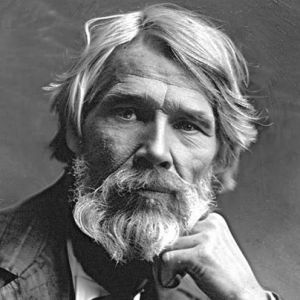
Thomas Carlyle was a Scottish philosopher, satirical writer, essayist, historian, and teacher known for his complex and vivid prose. Born on December 4, 1795, in Ecclefechan, Scotland, he became a leading figure in the Victorian era with works like "Sartor Resartus" and "The French Revolution: A History." Carlyle's writings often delved into themes of heroism, social critique, and the importance of strong leadership.
Author's Books:
Sort by:
by:
Thomas Carlyle
I. Emerson to Carlyle Boston, Massachusetts, 14 May, 1884 My Dear Sir,—There are some purposes we delay long to execute simply because we have them more at heart than others, and such an one has been for many weeks, I may say months, my design of writing you an epistle. Some chance wind of Fame blew your name to me, perhaps two years ago, as the author of papers which I had already distinguished (as...
more...
by:
Thomas Carlyle
Chapter 1.1.I. Louis the Well-Beloved. President Henault, remarking on royal Surnames of Honour how difficult it often is to ascertain not only why, but even when, they were conferred, takes occasion in his sleek official way, to make a philosophical reflection. 'The Surname of Bien-aime (Well-beloved),' says he, 'which Louis XV. bears, will not leave posterity in the same doubt. This...
more...

by:
Thomas Carlyle
BIOGRAPHICAL INTRODUCTION. There comes a time in the career of every man of genius who has devoted a long life to the instruction and enlightenment of his fellow-creatures, when he receives before his death all the honours paid by posterity. Thus when a great essayist or historian lives to attain a classic and world-wide fame, his own biography becomes as interesting to the public as those he himself...
more...
by:
Thomas Carlyle
A DAY WITH FRIEDRICH.—(23d July, 1779.) "OBERAMTMANN (Head-Manager) Fromme" was a sister's son of Poet, Gleim,—Gleim Canon of Halberstadt, who wrote Prussian "grenadier-songs" in, or in reference to, the Seven-Years War, songs still printed, but worth little; who begged once, after Friedrich's death, an OLD HAT of his, and took it with him to Halberstadt (where I hope it...
more...
by:
Thomas Carlyle
Chapter I.—WHAT FRIEDRICH HAD READ IN THE MENZEL DOCUMENTS. The ill-informed world, entirely unaware of what Friedrich had been studying and ascertaining, to his bitter sorrow, for four years past, was extremely astonished at the part he took in those French-English troubles; extremely provoked at his breaking out again into a Third Silesian War, greater than all the others, and kindling all Europe...
more...
by:
Thomas Carlyle
LECTURES ON HEROES. LECTURE I. THE HERO AS DIVINITY. ODIN. PAGANISM: SCANDINAVIAN MYTHOLOGY. [May 5, 1840.] We have undertaken to discourse here for a little on Great Men, their manner of appearance in our world's business, how they have shaped themselves in the world's history, what ideas men formed of them, what work they did;—on Heroes, namely, and on their reception and performance;...
more...
by:
Thomas Carlyle
CORRESPONDENCE OF CARLYLE AND EMERSON LXXVI. Emerson to Carlyle Concord, 1 July, 1842 My Dear Carlyle,—I have lately received from our slow friends, James Munroe & Co., $246 on account of their sales of the Miscellanies,—and I enclose a bill of Exchange for L51, which cost $246.50. It is a long time since I sent you any sketch of the account itself, and indeed a long time since it was posted,...
more...

by:
Thomas Carlyle
Chapter I. — BRANNIBOR: HENRY THE FOWLER. The Brandenburg Countries, till they become related to the Hohenzollern Family which now rules there, have no History that has proved memorable to mankind. There has indeed been a good deal written under that title; but there is by no means much known, and of that again there is alarmingly little that is worth knowing or remembering. Pytheas, the Marseilles...
more...
by:
Thomas Carlyle
Chapter I.—FRIEDRICH RESUMES HIS PEACEABLE PURSUITS. Friedrich's own Peace being made on such terms, his wish and hope was, that it might soon be followed by a general European one; that, the live-coal, which had kindled this War, being quenched, the War itself might go out. Silesia is his; farther interest in the Controversy, except that it would end itself in some fair manner, he has none....
more...
by:
Thomas Carlyle
INTRODUCTION One of the most vital and pregnant books in our modern literature, “Sartor Resartus” is also, in structure and form, one of the most daringly original. It defies exact classification. It is not a philosophic treatise. It is not an autobiography. It is not a romance. Yet in a sense it is all these combined. Its underlying purpose is to expound in broad outline certain ideas which lay at...
more...