

Categories
- Antiques & Collectibles 13
- Architecture 36
- Art 48
- Bibles 22
- Biography & Autobiography 815
- Body, Mind & Spirit 145
- Business & Economics 28
- Children's Books 15
- Children's Fiction 12
- Computers 4
- Cooking 94
- Crafts & Hobbies 4
- Drama 346
- Education 63
- Family & Relationships 59
- Fiction 11841
- Foreign Language Study 1
- Games 19
- Gardening 17
- Health & Fitness 35
- History 1382
- House & Home 1
- Humor 147
- Juvenile Fiction 1880
- Juvenile Nonfiction 202
- Language Arts & Disciplines 89
- Law 16
- Literary Collections 687
- Literary Criticism 179
- Mathematics 13
- Medical 43
- Music 40
- Nature 181
- Non-Classifiable 1768
- Performing Arts 7
- Periodicals 1453
- Philosophy 65
- Photography 2
- Poetry 897
- Political Science 205
- Psychology 44
- Reference 154
- Religion 516
- Science 128
- Self-Help 87
- Social Science 83
- Sports & Recreation 34
- Study Aids 3
- Technology & Engineering 60
- Transportation 23
- Travel 463
- True Crime 29
Stopford A. (Stopford Augustus) Brooke
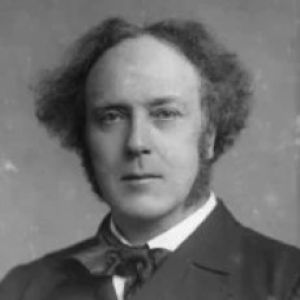
Stopford Augustus Brooke (1832–1916) was an Irish clergyman, chaplain, and writer known for his religious and literary works. Initially an Anglican priest, he became a prominent preacher in London but later shifted towards Unitarianism due to his liberal theological views. Brooke was also an accomplished literary critic, particularly noted for his work on Romantic poets such as in "The Life of Frederick W. Robertson" and "Theology in the English Poets". His "Primer of English Literature" remains a significant contribution to the study of English literature.
Author's Books:
Sort by:
Introduction Many years have passed by since, delivering the Inaugural Lecture of the Irish Literary Society in London, I advocated as one of its chief aims the recasting into modern form and in literary English of the old Irish legends, preserving the atmosphere of the original tales as much as possible, but clearing them from repetitions, redundant expressions, idioms interesting in Irish but...
more...
CHAPTER I BROWNING AND TENNYSON Parnassus, Apollo's mount, has two peaks, and on these, for sixty years, from 1830 to 1890, two poets sat, till their right to these lofty peaks became unchallenged. Beneath them, during these years, on the lower knolls of the mount of song, many new poets sang; with diverse instruments, on various subjects, and in manifold ways. They had their listeners; the Muses...
more...