

Categories
- Antiques & Collectibles 13
- Architecture 36
- Art 48
- Bibles 22
- Biography & Autobiography 815
- Body, Mind & Spirit 144
- Business & Economics 28
- Children's Books 15
- Children's Fiction 12
- Computers 4
- Cooking 94
- Crafts & Hobbies 4
- Drama 346
- Education 63
- Family & Relationships 59
- Fiction 11841
- Foreign Language Study 1
- Games 19
- Gardening 17
- Health & Fitness 35
- History 1382
- House & Home 1
- Humor 147
- Juvenile Fiction 1877
- Juvenile Nonfiction 202
- Language Arts & Disciplines 89
- Law 16
- Literary Collections 687
- Literary Criticism 179
- Mathematics 13
- Medical 43
- Music 40
- Nature 181
- Non-Classifiable 1768
- Performing Arts 7
- Periodicals 1453
- Philosophy 65
- Photography 2
- Poetry 897
- Political Science 205
- Psychology 44
- Reference 154
- Religion 516
- Science 128
- Self-Help 86
- Social Science 83
- Sports & Recreation 34
- Study Aids 3
- Technology & Engineering 60
- Transportation 23
- Travel 463
- True Crime 29
Samuel Peter Orth
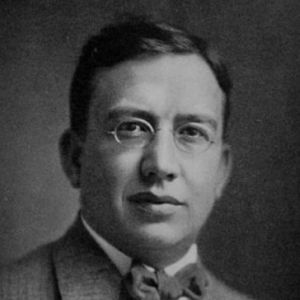
Samuel Peter Orth (1873–1922) was an American historian, political scientist, and author known for his works on government and social institutions. He wrote several books, including "Our Foreigners," which explored immigration in the United States, and "The Centralization of Administration in Ohio," focused on state governance. Orth was also a professor at Cornell University, where he taught political science. His contributions to the study of American government and administration have been recognized for their influence on political thought during the early 20th century.
Author's Books:
Sort by:
CHAPTER I Long before men awoke to the vision of America, the Old World was the scene of many stupendous migrations. One after another, the Goths, the Huns, the Saracens, the Turks, and the Tatars, by the sheer tidal force of their numbers threatened to engulf the ancient and medieval civilization of Europe. But neither in the motives prompting them nor in the effect they produced, nor yet in the...
more...
CHAPTER I. THE BACKGROUND Three momentous things symbolize the era that begins its cycle with the memorable year of 1776: the Declaration of Independence, the steam engine, and Adam Smith's book, "The Wealth of Nations." The Declaration gave birth to a new nation, whose millions of acres of free land were to shift the economic equilibrium of the world; the engine multiplied man's...
more...
CHAPTER I. THE RISE OF THE PARTY The party system is an essential instrument of Democracy. Wherever government rests upon the popular will, there the party is the organ of expression and the agency of the ultimate power. The party is, moreover, a forerunner of Democracy, for parties have everywhere preceded free government. Long before Democracy as now understood was anywhere established, long before...
more...