

Categories
- Antiques & Collectibles 13
- Architecture 36
- Art 48
- Bibles 22
- Biography & Autobiography 815
- Body, Mind & Spirit 144
- Business & Economics 28
- Children's Books 15
- Children's Fiction 12
- Computers 4
- Cooking 94
- Crafts & Hobbies 4
- Drama 346
- Education 63
- Family & Relationships 59
- Fiction 11839
- Foreign Language Study 1
- Games 19
- Gardening 17
- Health & Fitness 35
- History 1382
- House & Home 1
- Humor 147
- Juvenile Fiction 1877
- Juvenile Nonfiction 202
- Language Arts & Disciplines 89
- Law 16
- Literary Collections 687
- Literary Criticism 179
- Mathematics 13
- Medical 43
- Music 40
- Nature 181
- Non-Classifiable 1768
- Performing Arts 7
- Periodicals 1453
- Philosophy 65
- Photography 2
- Poetry 897
- Political Science 205
- Psychology 44
- Reference 154
- Religion 516
- Science 128
- Self-Help 86
- Social Science 83
- Sports & Recreation 34
- Study Aids 3
- Technology & Engineering 60
- Transportation 23
- Travel 463
- True Crime 29
Robert S. (Robert Sangster) Rait
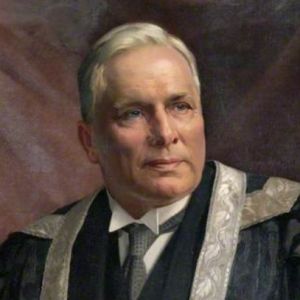
Robert Sangster Rait (1874–1936) was a Scottish historian and academic known for his expertise in Scottish and British history. He served as the Historiographer Royal for Scotland and was appointed Principal of the University of Glasgow in 1929. Rait authored several historical works, including "Five Stuart Princesses" and "The Parliaments of Scotland". His contributions focused on the political and social history of Scotland, and he was highly regarded for his insightful analysis of constitutional developments.
Author's Books:
Sort by:
INTRODUCTION The present volume has been published with two main objects. The writer has attempted to exhibit, in outline, the leading features of the international history of the two countries which, in 1707, became the United Kingdom. Relations with England form a large part, and the heroic part, of Scottish history, relations with Scotland a very much smaller part of English history. The result has...
more...
INTRODUCTORY "A Clerk ther was of Oxenford also,That unto logik hadde longe y-goAs lene was his hors as is a rake,And he was not right fat, I undertake;But loked holwe, and therto soberly,Ful thredbar was his overest courtepy,For he had geten him yet no benefyce,Ne was so worldly for to have offyce.For him was lever have at his beddes heedTwenty bokes, clad in blak or reed,Of Aristotle and his...
more...