

Categories
- Antiques & Collectibles 13
- Architecture 36
- Art 48
- Bibles 22
- Biography & Autobiography 815
- Body, Mind & Spirit 145
- Business & Economics 28
- Children's Books 15
- Children's Fiction 12
- Computers 4
- Cooking 94
- Crafts & Hobbies 4
- Drama 346
- Education 63
- Family & Relationships 59
- Fiction 11841
- Foreign Language Study 1
- Games 19
- Gardening 17
- Health & Fitness 35
- History 1382
- House & Home 1
- Humor 147
- Juvenile Fiction 1880
- Juvenile Nonfiction 202
- Language Arts & Disciplines 89
- Law 16
- Literary Collections 687
- Literary Criticism 179
- Mathematics 13
- Medical 43
- Music 40
- Nature 181
- Non-Classifiable 1768
- Performing Arts 7
- Periodicals 1453
- Philosophy 65
- Photography 2
- Poetry 897
- Political Science 205
- Psychology 44
- Reference 154
- Religion 516
- Science 128
- Self-Help 87
- Social Science 83
- Sports & Recreation 34
- Study Aids 3
- Technology & Engineering 60
- Transportation 23
- Travel 463
- True Crime 29
Richard Green Moulton
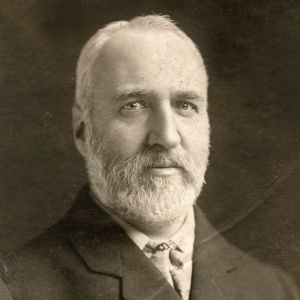
Richard Green Moulton (1849–1924) was a British literary scholar and professor who specialized in the study of literature and the Bible. He is best known for his works on the literary structure and interpretation of biblical texts, such as "The Literary Study of the Bible" (1895). Moulton's approach emphasized the Bible as a work of literature, focusing on its narrative, poetic, and dramatic elements. He also authored "The Modern Reader's Bible" (1907), which presented the Bible in a way accessible to modern readers, emphasizing its artistic and intellectual qualities.
Author's Books:
Sort by:
Introduction That which we call 'The Bible' has the outward appearance of a book: in reality it is—what the word 'bible' implies in the original Greek—a whole library. More than fifty books, the production of a large number of different authors, representing periods of time extending over many centuries, are all comprehended between the covers of a single volume. There is no...
more...

MEMORANDUM The Sacred Legends touched by this Trilogy would be familiar, in outline, to the Auditors: e. g.: The woes of the House of Atreus: the foundation of them laid by Atreus when, to take vengeance on his brother Thyestes, he served up to him at a banquet the flesh of his own sons; His grandsons were Agamemnon and Menelaus: Menelaus' wife, Helen, was stolen by a guest, Paris of Troy, which...
more...