

Categories
- Antiques & Collectibles 13
- Architecture 36
- Art 48
- Bibles 22
- Biography & Autobiography 816
- Body, Mind & Spirit 145
- Business & Economics 32
- Children's Books 15
- Children's Fiction 13
- Computers 4
- Cooking 94
- Crafts & Hobbies 4
- Drama 346
- Education 68
- Family & Relationships 62
- Fiction 11845
- Foreign Language Study 2
- Games 19
- Gardening 17
- Health & Fitness 36
- History 1383
- House & Home 1
- Humor 147
- Juvenile Fiction 1884
- Juvenile Nonfiction 202
- Language Arts & Disciplines 89
- Law 16
- Literary Collections 687
- Literary Criticism 180
- Mathematics 13
- Medical 43
- Music 40
- Nature 181
- Non-Classifiable 1768
- Performing Arts 7
- Periodicals 1453
- Philosophy 65
- Photography 2
- Poetry 898
- Political Science 206
- Psychology 44
- Reference 154
- Religion 516
- Science 128
- Self-Help 89
- Social Science 84
- Sports & Recreation 34
- Study Aids 3
- Technology & Engineering 60
- Transportation 23
- Travel 463
- True Crime 29
Richard Garnett
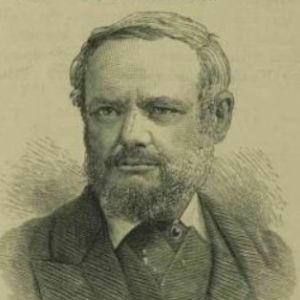
Richard Garnett (1835–1906) was an English scholar, librarian, and writer known for his contributions to literature and library science. He served as a keeper at the British Museum and later became the superintendent of its Reading Room. Garnett was also a prolific author, with notable works such as "The Twilight of the Gods" (1888), a collection of short stories blending mythology and fantasy. In addition to his own literary output, he edited and translated works of various authors, contributing to the advancement of English literary scholarship.
Author's Books:
Sort by:

by:
Richard Garnett
CHAPTER I. John Milton was born on December 9, 1608, when Shakespeare had lately produced "Antony and Cleopatra," when Bacon was writing his "Wisdom of the Ancients" and Ralegh his "History of the World," when the English Bible was hastening into print; when, nevertheless, in the opinion of most foreigners and many natives, England was intellectually unpolished, and her...
more...
by:
Richard Garnett
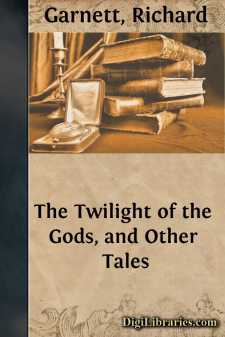
THE TWILIGHT OF THE GODS Truth fails not, but her outward forms that bear The longest date do melt like frosty rime. I The fourth Christian century was far past its meridian, when, high above the summit of the supreme peak of Caucasus, a magnificent eagle came sailing on broad fans into the blue, and his shadow skimmed the glittering snow as it had done day by day for thousands of years. A human...
more...