

Categories
- Antiques & Collectibles 13
- Architecture 36
- Art 48
- Bibles 22
- Biography & Autobiography 815
- Body, Mind & Spirit 144
- Business & Economics 28
- Children's Books 15
- Children's Fiction 12
- Computers 4
- Cooking 94
- Crafts & Hobbies 4
- Drama 346
- Education 63
- Family & Relationships 59
- Fiction 11841
- Foreign Language Study 1
- Games 19
- Gardening 17
- Health & Fitness 35
- History 1382
- House & Home 1
- Humor 147
- Juvenile Fiction 1877
- Juvenile Nonfiction 202
- Language Arts & Disciplines 89
- Law 16
- Literary Collections 687
- Literary Criticism 179
- Mathematics 13
- Medical 43
- Music 40
- Nature 181
- Non-Classifiable 1768
- Performing Arts 7
- Periodicals 1453
- Philosophy 65
- Photography 2
- Poetry 897
- Political Science 205
- Psychology 44
- Reference 154
- Religion 516
- Science 128
- Self-Help 86
- Social Science 83
- Sports & Recreation 34
- Study Aids 3
- Technology & Engineering 60
- Transportation 23
- Travel 463
- True Crime 29
Ralph Barton Perry
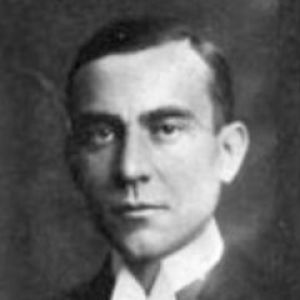
Ralph Barton Perry (1876–1957) was an influential American philosopher and educator, best known for his work in pragmatism and value theory. He was a student of William James and later wrote an authoritative biography of him titled "The Thought and Character of William James." Perry's own philosophical contributions include the development of a theory called "interest theory" in works like "General Theory of Value," where he emphasized the role of interest in determining value. He was a professor at Harvard University, where he shaped many philosophical debates during the first half of the 20th century.
Author's Books:
Sort by:
CHAPTER I MORALITY AS THE ORGANIZATION OF LIFE In the words with which this book is inscribed, Bishop Butler conveys with directness and gravity the conviction that morality is neither a mystery nor a convention, but simply an observance of the laws of provident living. "Things and actions are what they are, and the consequences of them will be what they will be: why then should we desire to be...
more...
PREFACE In an essay on "The Problem of Philosophy at the Present Time," Professor Edward Caird says that "philosophy is not a first venture into a new field of thought, but the rethinking of a secular and religious consciousness which has been developed, in the main, independently of philosophy." If there be any inspiration and originality in this book, they are due to my great desire...
more...