

Categories
- Antiques & Collectibles 13
- Architecture 36
- Art 48
- Bibles 22
- Biography & Autobiography 815
- Body, Mind & Spirit 144
- Business & Economics 28
- Children's Books 15
- Children's Fiction 12
- Computers 4
- Cooking 94
- Crafts & Hobbies 4
- Drama 346
- Education 63
- Family & Relationships 59
- Fiction 11841
- Foreign Language Study 1
- Games 19
- Gardening 17
- Health & Fitness 35
- History 1382
- House & Home 1
- Humor 147
- Juvenile Fiction 1877
- Juvenile Nonfiction 202
- Language Arts & Disciplines 89
- Law 16
- Literary Collections 687
- Literary Criticism 179
- Mathematics 13
- Medical 43
- Music 40
- Nature 181
- Non-Classifiable 1768
- Performing Arts 7
- Periodicals 1453
- Philosophy 65
- Photography 2
- Poetry 897
- Political Science 205
- Psychology 44
- Reference 154
- Religion 516
- Science 128
- Self-Help 86
- Social Science 83
- Sports & Recreation 34
- Study Aids 3
- Technology & Engineering 60
- Transportation 23
- Travel 463
- True Crime 29
More, Thomas, Saint
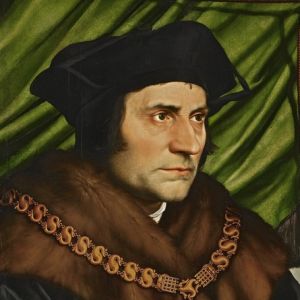
Sir Thomas More (1478–1535) was an English statesman, lawyer, and humanist writer, best known for his book "Utopia" (1516), which depicted an idealized society on a fictional island. A devout Catholic, More served as Lord Chancellor under King Henry VIII but refused to support the king's break with the Roman Catholic Church. His steadfast refusal to endorse Henry's marriage to Anne Boleyn and the establishment of the Church of England led to his arrest and eventual execution for treason. More was canonized as a saint by the Catholic Church in 1935 for his martyrdom and unwavering faith.
Author's Books:
Sort by:
INTRODUCTION Sir Thomas More, son of Sir John More, a justice of the King’s Bench, was born in 1478, in Milk Street, in the city of London. After his earlier education at St. Anthony’s School, in Threadneedle Street, he was placed, as a boy, in the household of Cardinal John Morton, Archbishop of Canterbury and Lord Chancellor. It was not unusual for persons of wealth or influence and sons of...
more...
BOOK ONE VINCENT: Who would have thought, O my good uncle, a few years past, that those in this country who would visit their friends lying in disease and sickness would come, as I do now, to seek and fetch comfort of them? Or who would have thought that in giving comfort to them they would use the way that I may well use to you? For albeit that the priests and friars be wont to call upon sick men to...
more...