

Categories
- Antiques & Collectibles 13
- Architecture 36
- Art 48
- Bibles 22
- Biography & Autobiography 815
- Body, Mind & Spirit 144
- Business & Economics 28
- Children's Books 15
- Children's Fiction 12
- Computers 4
- Cooking 94
- Crafts & Hobbies 4
- Drama 346
- Education 63
- Family & Relationships 59
- Fiction 11839
- Foreign Language Study 1
- Games 19
- Gardening 17
- Health & Fitness 35
- History 1382
- House & Home 1
- Humor 147
- Juvenile Fiction 1873
- Juvenile Nonfiction 202
- Language Arts & Disciplines 89
- Law 16
- Literary Collections 687
- Literary Criticism 179
- Mathematics 13
- Medical 43
- Music 40
- Nature 181
- Non-Classifiable 1768
- Performing Arts 7
- Periodicals 1453
- Philosophy 65
- Photography 2
- Poetry 897
- Political Science 205
- Psychology 44
- Reference 154
- Religion 515
- Science 128
- Self-Help 86
- Social Science 83
- Sports & Recreation 34
- Study Aids 3
- Technology & Engineering 60
- Transportation 23
- Travel 463
- True Crime 29
Mary Antin
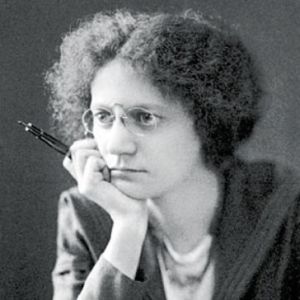
Mary Antin (1881–1949) was a Russian-Jewish immigrant to the United States, best known for her memoir "The Promised Land" (1912), which details her experiences of immigrating to America and adapting to a new culture. Born in Polotsk, Russia, she moved to the U.S. with her family in 1894, settling in Boston. Antin became an advocate for immigration and assimilation, emphasizing the opportunities the U.S. offered to immigrants. Her work captures both the struggles and the optimism of the immigrant experience in early 20th-century America.
Author's Books:
Sort by:
by:
Mary Antin
INTRODUCTION I was born, I have lived, and I have been made over. Is it not time to write my life's story? I am just as much out of the way as if I were dead, for I am absolutely other than the person whose story I have to tell. Physical continuity with my earlier self is no disadvantage. I could speak in the third person and not feel that I was masquerading. I can analyze my subject, I can reveal...
more...
by:
Mary Antin
FOREWORD The "infant phenomenon" in literature is rarer than in more physical branches of art, but its productions are not likely to be of value outside the doting domestic circle. Even Pope who "lisped in numbers for the numbers came," did not add to our Anthology from his cradle, though he may therein have acquired his monotonous rocking-metre. Immaturity of mind and experience, so...
more...