

Categories
- Antiques & Collectibles 13
- Architecture 36
- Art 48
- Bibles 22
- Biography & Autobiography 815
- Body, Mind & Spirit 144
- Business & Economics 28
- Children's Books 15
- Children's Fiction 12
- Computers 4
- Cooking 94
- Crafts & Hobbies 4
- Drama 346
- Education 63
- Family & Relationships 59
- Fiction 11839
- Foreign Language Study 1
- Games 19
- Gardening 17
- Health & Fitness 35
- History 1382
- House & Home 1
- Humor 147
- Juvenile Fiction 1877
- Juvenile Nonfiction 202
- Language Arts & Disciplines 89
- Law 16
- Literary Collections 687
- Literary Criticism 179
- Mathematics 13
- Medical 43
- Music 40
- Nature 181
- Non-Classifiable 1768
- Performing Arts 7
- Periodicals 1453
- Philosophy 65
- Photography 2
- Poetry 897
- Political Science 205
- Psychology 44
- Reference 154
- Religion 516
- Science 128
- Self-Help 86
- Social Science 83
- Sports & Recreation 34
- Study Aids 3
- Technology & Engineering 60
- Transportation 23
- Travel 463
- True Crime 29
Luigi Antonio Lanzi
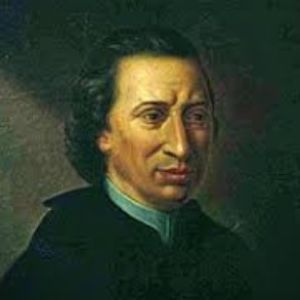
Luigi Antonio Lanzi (1732-1810) was an Italian art historian, archaeologist, and priest known for his contributions to the study of Italian art and ancient civilizations. His most significant work, "Storia pittorica della Italia" (History of Painting in Italy), published in the late 18th century, is an influential survey of Italian painting from the medieval period to his time. Lanzi was particularly interested in the regional schools of painting and helped establish a systematic approach to art history. He also made contributions to archaeology with his studies of Etruscan and Roman antiquities.
Author's Books:
Sort by:
PREFACE. When detached or individual histories become so numerous that they can neither be easily collected nor perused, the public interest requires a writer capable of arranging and embodying them in the form of a general historical narrative; not, indeed, by a minute detail of their whole contents, but by selecting from each that which appears most interesting and instructive. Hence it mostly...
more...
ROMAN SCHOOL. I have frequently heard the lovers of art express a doubt whether the Roman School possesses the same inherent right to that distinctive appellation as the schools of Florence, Bologna, and Venice. Those of the latter cities were, indeed, founded by their respective citizens, and supported through a long course of ages; while the Roman School, it may be said, could boast only of Giulio...
more...
VENETIAN SCHOOL. This School would have required no farther illustration from any other pen, had Signor Antonio Zanetti, in his highly esteemed work upon Venetian Painting, included a more ample consideration of the artists of the state, instead of confining his attention wholly to those, whose productions, ornamenting the churches and other public places, had all been completed in the city of Venice...
more...