

Categories
- Antiques & Collectibles 13
- Architecture 36
- Art 48
- Bibles 22
- Biography & Autobiography 815
- Body, Mind & Spirit 145
- Business & Economics 28
- Children's Books 15
- Children's Fiction 12
- Computers 4
- Cooking 94
- Crafts & Hobbies 4
- Drama 346
- Education 63
- Family & Relationships 59
- Fiction 11841
- Foreign Language Study 1
- Games 19
- Gardening 17
- Health & Fitness 35
- History 1382
- House & Home 1
- Humor 147
- Juvenile Fiction 1880
- Juvenile Nonfiction 202
- Language Arts & Disciplines 89
- Law 16
- Literary Collections 687
- Literary Criticism 179
- Mathematics 13
- Medical 43
- Music 40
- Nature 181
- Non-Classifiable 1768
- Performing Arts 7
- Periodicals 1453
- Philosophy 65
- Photography 2
- Poetry 897
- Political Science 205
- Psychology 44
- Reference 154
- Religion 516
- Science 128
- Self-Help 87
- Social Science 83
- Sports & Recreation 34
- Study Aids 3
- Technology & Engineering 60
- Transportation 23
- Travel 463
- True Crime 29
Lady (Mary Anne) Barker
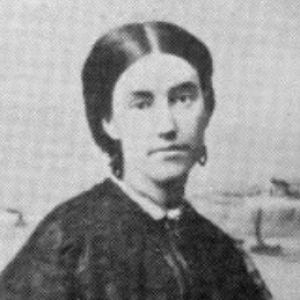
Lady Mary Anne Barker (1831–1911) was a British author known for her writings on colonial life in New Zealand and South Africa. Her most famous work, "Station Life in New Zealand" (1870), provides vivid accounts of her experiences managing a sheep station in the Canterbury region. Barker's writings combined humor, practical advice, and vivid descriptions, making her a popular voice for British readers curious about colonial life. Later, she also wrote "A Year's Housekeeping in South Africa" (1877), which detailed her time spent in the Cape Colony.
Author's Books:
Sort by:

Chapter I: A Bush picnic. Since my return to England, two years ago, I have been frequently asked by my friends and acquaintances, "How did you amuse yourself up at the station?" I am generally tempted to reply, "We were all too busy to need amusement;" but when I come to think the matter over calmly and dispassionately, I find that a great many of our occupations may be classed under...
more...
Letter I: Two months at sea—Melbourne. Port Phillip Hotel, Melbourne. September 22d, 1865. .... Now I must give you an account of our voyage: it has been a very quick one for the immense distance traversed, sometimes under canvas, but generally steaming. We saw no land between the Lizard and Cape Otway light—that is, for fifty-seven days: and oh, the monotony of that time!—the monotony of it! Our...
more...