

Categories
- Antiques & Collectibles 13
- Architecture 36
- Art 48
- Bibles 22
- Biography & Autobiography 816
- Body, Mind & Spirit 145
- Business & Economics 30
- Children's Books 15
- Children's Fiction 12
- Computers 4
- Cooking 94
- Crafts & Hobbies 4
- Drama 346
- Education 64
- Family & Relationships 59
- Fiction 11841
- Foreign Language Study 2
- Games 19
- Gardening 17
- Health & Fitness 35
- History 1383
- House & Home 1
- Humor 147
- Juvenile Fiction 1884
- Juvenile Nonfiction 202
- Language Arts & Disciplines 89
- Law 16
- Literary Collections 687
- Literary Criticism 179
- Mathematics 13
- Medical 43
- Music 40
- Nature 181
- Non-Classifiable 1768
- Performing Arts 7
- Periodicals 1453
- Philosophy 65
- Photography 2
- Poetry 897
- Political Science 205
- Psychology 44
- Reference 154
- Religion 516
- Science 128
- Self-Help 87
- Social Science 83
- Sports & Recreation 34
- Study Aids 3
- Technology & Engineering 60
- Transportation 23
- Travel 463
- True Crime 29
Kuno Meyer
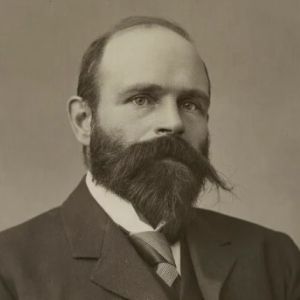
Kuno Meyer (1858–1919) was a German scholar and Celticist, known for his significant contributions to the study of early Irish literature and language. He was instrumental in introducing Irish texts to a wider audience, translating and editing works such as "The Vision of MacConglinne" and "The Voyage of Bran". Meyer also founded the journal "Zeitschrift für celtische Philologie" and promoted the study of Celtic languages across Europe. His research had a lasting impact on the preservation and understanding of medieval Irish culture.
Author's Books:
Sort by:
by:
Kuno Meyer
PREFACE The collection of Irish Triads, which is here edited and translated for the first time, has come down to us in the following nine manuscripts, dating from the fourteenth to the nineteenth century:— L, i.e. the Yellow Book of Lecan, a vellum of the end of the fourteenth century, pp. 414b—418a, a complete copy. B, i.e. the Book of Ballymote, a vellum of the end of the fourteenth century, pp....
more...
by:
Kuno Meyer
INTRODUCTION In offering this collection of translations from early Irish poetry to a wider public I feel that I am expected to give a brief account of the literature from which they are taken—a literature so little known that its very existence has been doubted or denied by some, while others, who had the misfortune to make its acquaintance in ill-chosen or inadequate renderings, have refused to...
more...