

Categories
- Antiques & Collectibles 13
- Architecture 36
- Art 48
- Bibles 22
- Biography & Autobiography 815
- Body, Mind & Spirit 144
- Business & Economics 28
- Children's Books 15
- Children's Fiction 12
- Computers 4
- Cooking 94
- Crafts & Hobbies 4
- Drama 346
- Education 63
- Family & Relationships 59
- Fiction 11841
- Foreign Language Study 1
- Games 19
- Gardening 17
- Health & Fitness 35
- History 1382
- House & Home 1
- Humor 147
- Juvenile Fiction 1877
- Juvenile Nonfiction 202
- Language Arts & Disciplines 89
- Law 16
- Literary Collections 687
- Literary Criticism 179
- Mathematics 13
- Medical 43
- Music 40
- Nature 181
- Non-Classifiable 1768
- Performing Arts 7
- Periodicals 1453
- Philosophy 65
- Photography 2
- Poetry 897
- Political Science 205
- Psychology 44
- Reference 154
- Religion 516
- Science 128
- Self-Help 86
- Social Science 83
- Sports & Recreation 34
- Study Aids 3
- Technology & Engineering 60
- Transportation 23
- Travel 463
- True Crime 29
James Owen Dorsey
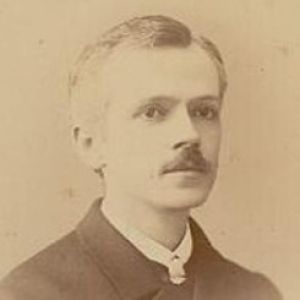
James Owen Dorsey (1848–1895) was an American ethnologist and linguist, known for his work documenting the languages and cultures of Native American tribes, particularly the Siouan and Athabaskan groups. As a member of the Bureau of American Ethnology, he contributed extensively to the study of Native languages, helping to preserve knowledge through translations and research. His notable works include "Omaha Sociology" and "Siouan Sociology," which provided in-depth analyses of Native American social structures. Dorsey's contributions were foundational in early anthropological and linguistic studies of indigenous cultures in the United States.
Author's Books:
Sort by:
DWELLINGS. The primitive domiciles of the Omaha were chiefly (1) lodges of earth or, more rarely, of bark or mats, and (2) skin lodges or tents. It may be observed that there were no sacred rites connected with the earth lodge-building or tent-making among the Omaha and Ponka. Earth Lodges. When earth lodges were built, the people did not make them in a tribal circle, each man erecting his lodge where...
more...
TRANSLATION. Once upon a time the Rabbit dwelt in a lodge with no one but his grandmother. And it was his custom to go hunting very early in the morning. No matter how early in the morning he went, a person with very long feet had been along, leaving a trail. And he (the Rabbit), wished to know him. "Now," thought he, "I will go in advance of the person." Having arisen very early in the...
more...