

Categories
- Antiques & Collectibles 13
- Architecture 36
- Art 48
- Bibles 22
- Biography & Autobiography 815
- Body, Mind & Spirit 144
- Business & Economics 28
- Children's Books 15
- Children's Fiction 12
- Computers 4
- Cooking 94
- Crafts & Hobbies 4
- Drama 346
- Education 63
- Family & Relationships 59
- Fiction 11841
- Foreign Language Study 1
- Games 19
- Gardening 17
- Health & Fitness 35
- History 1382
- House & Home 1
- Humor 147
- Juvenile Fiction 1877
- Juvenile Nonfiction 202
- Language Arts & Disciplines 89
- Law 16
- Literary Collections 687
- Literary Criticism 179
- Mathematics 13
- Medical 43
- Music 40
- Nature 181
- Non-Classifiable 1768
- Performing Arts 7
- Periodicals 1453
- Philosophy 65
- Photography 2
- Poetry 897
- Political Science 205
- Psychology 44
- Reference 154
- Religion 516
- Science 128
- Self-Help 86
- Social Science 83
- Sports & Recreation 34
- Study Aids 3
- Technology & Engineering 60
- Transportation 23
- Travel 463
- True Crime 29
James Harvey Robinson
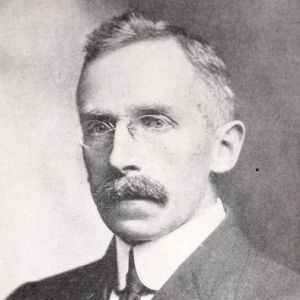
James Harvey Robinson was an influential American historian and educator, born in 1863 and known for reshaping the study of history in the early 20th century. He emphasized the importance of interdisciplinary approaches, blending history with other social sciences, which he termed "The New History." Robinson's key works include "The New History" (1912) and "An Introduction to the History of Western Europe" (1902), both of which advocated for history's relevance to contemporary issues. He co-founded the New School for Social Research in 1919, promoting progressive ideas in education and public intellectualism.
Author's Books:
Sort by:
1. ON THE PURPOSE OF THIS VOLUME If some magical transformation could be produced in men's ways of looking at themselves and their fellows, no inconsiderable part of the evils which now afflict society would vanish away or remedy themselves automatically. If the majority of influential persons held the opinions and occupied the point of view that a few rather uninfluential people now do, there...
more...

PREFACE In introducing the student to the history of the development of European culture, the problem of proportion has seemed to me, throughout, the fundamental one. Consequently I have endeavored not only to state matters truly and clearly but also to bring the narrative into harmony with the most recent conceptions of the relative importance of past events and institutions. It has seemed best, in an...
more...