

Categories
- Antiques & Collectibles 13
- Architecture 36
- Art 48
- Bibles 22
- Biography & Autobiography 815
- Body, Mind & Spirit 145
- Business & Economics 28
- Children's Books 15
- Children's Fiction 12
- Computers 4
- Cooking 94
- Crafts & Hobbies 4
- Drama 346
- Education 63
- Family & Relationships 59
- Fiction 11841
- Foreign Language Study 1
- Games 19
- Gardening 17
- Health & Fitness 35
- History 1382
- House & Home 1
- Humor 147
- Juvenile Fiction 1880
- Juvenile Nonfiction 202
- Language Arts & Disciplines 89
- Law 16
- Literary Collections 687
- Literary Criticism 179
- Mathematics 13
- Medical 43
- Music 40
- Nature 181
- Non-Classifiable 1768
- Performing Arts 7
- Periodicals 1453
- Philosophy 65
- Photography 2
- Poetry 897
- Political Science 205
- Psychology 44
- Reference 154
- Religion 516
- Science 128
- Self-Help 87
- Social Science 83
- Sports & Recreation 34
- Study Aids 3
- Technology & Engineering 60
- Transportation 23
- Travel 463
- True Crime 29
J. Franklin (John Franklin) Jameson
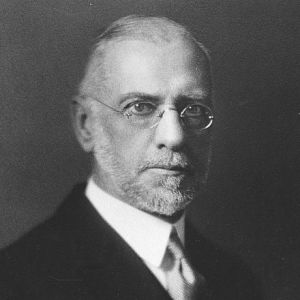
John Franklin Jameson (1859–1937) was an influential American historian and a pioneer in the professionalization of historical research in the United States. He was a founder of the American Historical Association and served as its president in 1907. Jameson is best known for his editorial work on "The Dictionary of United States History" and his leadership in creating the National Archives. His major contributions to American history include promoting the use of primary documents and establishing high standards for historical scholarship.
Author's Books:
Sort by:
PREFACE The National Society of the Colonial Dames of America have formed the laudable habit of illustrating the colonial period of United States history, in which they are especially interested, by published volumes of original historical material, previously unprinted, and relating to that period. Thus in the course of years they have made a large addition to the number of documentary sources...
more...
INTRODUCTION THE established church in the United Netherlands was the Reformed Church. Its polity was that of Geneva or of Presbyterianism. The minister and ruling or lay elders of the local church formed its consistory, corresponding to the Scottish or American kirk session. The next higher power, administrative or judicial, resided in the classis, consisting of all the ministers in a given district...
more...