

Categories
- Antiques & Collectibles 13
- Architecture 36
- Art 48
- Bibles 22
- Biography & Autobiography 816
- Body, Mind & Spirit 144
- Business & Economics 30
- Children's Books 15
- Children's Fiction 12
- Computers 4
- Cooking 94
- Crafts & Hobbies 4
- Drama 346
- Education 64
- Family & Relationships 59
- Fiction 11841
- Foreign Language Study 2
- Games 19
- Gardening 17
- Health & Fitness 35
- History 1383
- House & Home 1
- Humor 147
- Juvenile Fiction 1884
- Juvenile Nonfiction 202
- Language Arts & Disciplines 89
- Law 16
- Literary Collections 687
- Literary Criticism 179
- Mathematics 13
- Medical 43
- Music 40
- Nature 181
- Non-Classifiable 1768
- Performing Arts 7
- Periodicals 1453
- Philosophy 65
- Photography 2
- Poetry 897
- Political Science 205
- Psychology 44
- Reference 154
- Religion 515
- Science 128
- Self-Help 86
- Social Science 83
- Sports & Recreation 34
- Study Aids 3
- Technology & Engineering 60
- Transportation 23
- Travel 463
- True Crime 29
J. B. (John Bagnell) Bury
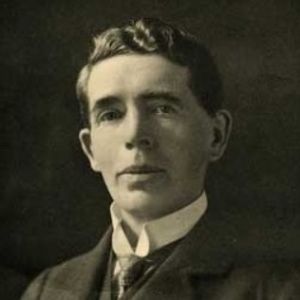
John Bagnell Bury (1861–1927) was an eminent Irish historian and scholar, specializing in the Byzantine Empire and ancient history. He held the position of Regius Professor of Modern History at the University of Cambridge and made significant contributions to historical methodology. Among his notable works are "The History of the Later Roman Empire" and "The Idea of Progress," in which he explored the evolution of human thought and civilization. Bury was also instrumental in promoting a more scientific and less nationalistic approach to historical studies.
Author's Books:
Sort by:
We may believe in the doctrine of Progress or we may not, but in either case it is a matter of interest to examine the origins and trace the history of what is now, even should it ultimately prove to be no more than an idolum saeculi, the animating and controlling idea of western civilisation. For the earthly Progress of humanity is the general test to which social aims and theories are submitted as a...
more...
CHAPTER I FREEDOM OF THOUGHT AND THE FORCES AGAINST IT IT is a common saying that thought is free. A man can never be hindered from thinking whatever he chooses so long as he conceals what he thinks. The working of his mind is limited only by the bounds of his experience and the power of his imagination. But this natural liberty of private thinking is of little value. It is unsatisfactory and even...
more...