

Categories
- Antiques & Collectibles 13
- Architecture 36
- Art 48
- Bibles 22
- Biography & Autobiography 815
- Body, Mind & Spirit 144
- Business & Economics 28
- Children's Books 18
- Children's Fiction 14
- Computers 4
- Cooking 94
- Crafts & Hobbies 4
- Drama 346
- Education 58
- Family & Relationships 59
- Fiction 11835
- Games 19
- Gardening 17
- Health & Fitness 34
- History 1378
- House & Home 1
- Humor 147
- Juvenile Fiction 1873
- Juvenile Nonfiction 202
- Language Arts & Disciplines 89
- Law 16
- Literary Collections 686
- Literary Criticism 179
- Mathematics 13
- Medical 41
- Music 40
- Nature 180
- Non-Classifiable 1768
- Performing Arts 7
- Periodicals 1453
- Philosophy 65
- Photography 2
- Poetry 896
- Political Science 203
- Psychology 44
- Reference 154
- Religion 515
- Science 126
- Self-Help 85
- Social Science 83
- Sports & Recreation 34
- Study Aids 3
- Technology & Engineering 60
- Transportation 23
- Travel 463
- True Crime 29
Hilaire Belloc
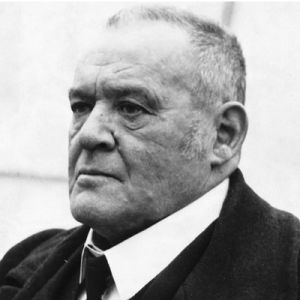
Hilaire Belloc (1870–1953) was a prolific English-French writer and historian known for his satirical and polemical style. His works spanned various genres, including poetry, essays, and historical studies, with notable titles like "The Path to Rome" and "Cautionary Tales for Children." Belloc was a prominent figure in early 20th-century literature and politics, advocating for Catholic social teaching and critiquing the socio-political issues of his time.
Author's Books:
Sort by:
by:
Hilaire Belloc
THE HISTORIC THAMES England has been built up upon the framework of her rivers, and, in that pattern, the principal line has been the line of the Thames. Partly because it was the main highway of Southern England, partly because it looked eastward towards the Continent from which the national life has been drawn, partly because it was better served by the tide than any other channel, but mainly because...
more...
by:
Hilaire Belloc
INTRODUCTION. It is the object of this book, and those which will succeed it in the same series, to put before the reader the main lines of the European War as it proceeds. Each such part must necessarily be completed and issued some little time after the events to which it relates have passed into history. The present first, or introductory volume, which is a preface to the whole, covers no more than...
more...
by:
Hilaire Belloc
DEDICATION TOTHE OTHER MANMR PHILIP KERSHAW There were once two men. They were men of might and breeding. They were young, they were intolerant, they were hale. Were there for humans as there is for dogs a tribunal to determine excellence; were there judges of anthropoidal points and juries to, give prizes for manly race, vigour, and the rest, undoubtedly these two men would have gained the gold and...
more...
by:
Hilaire Belloc
The Roman Roads in Picardy If a man were asked where he would find upon the map the sharpest impress of Rome and of the memories of Rome, and where he would most easily discover in a few days on foot the foundations upon which our civilization still rests, he might, in proportion to his knowledge of history and of Europe, be puzzled to reply. He might say that a week along the wall from Tyne to Solway...
more...
by:
Hilaire Belloc
PRAISE OF THIS BOOK To every honest reader that may purchase, hire, or receive this book, and to the reviewers also (to whom it is of triple profit), greeting--and whatever else can be had for nothing. If you should ask how this book came to be written, it was in this way. One day as I was wandering over the world I came upon the valley where I was born, and stopping there a moment to speak with them...
more...

by:
Hilaire Belloc
INTRODUCTION The Battle of Poitiers was fought ten years and four weeks after that of Crécy. The singular similarity between the two actions will be pointed out upon a later page. For the moment it must suffice to point out that Poitiers and Crécy form unique historical parallels, distinguishing like double summits the English successes of Edward III.’s army upon the Continent and of the first part...
more...
by:
Hilaire Belloc
MY DEAR ECCLES, You will, I know, permit me to address you these essays which are more the product of your erudition than of my enthusiasm. With the motives of their appearance you are familiar. We have wondered together that a society so avid of experience and enlargement as is ours, should ignore the chief expression of its closest neighbour, its highest rival and its coheir in Europe: should ignore,...
more...
by:
Hilaire Belloc
I About two hundred years ago a number of things began to appear in Europe which were the fruit of the Renaissance and of the Reformation combined: Two warring twins. These things appeared first of all in England, because England was the only province of Europe wherein the old Latin tradition ran side by side with the novel effects of protestantism. But for England the great schism and heresy of the...
more...

by:
Hilaire Belloc
INTRODUCTION Between those last precise accounts of military engagements which antiquity has left us in small number, and what may be called the modern history of war, there lies a period of many centuries—quite 1400 years—during which the details of an action and even the main features of a campaign are never given us by contemporary recorders. Through all that vast stretch of time we are...
more...
by:
Hilaire Belloc
INTRODUCTION Upon being asked by a Reader whether the verses contained in this book were true. And is it True? It is not True.And if it were it wouldn’t do,For people such as me and youWho pretty nearly all day longAre doing something rather wrong.Because if things were really so,You would have perished long ago,And I would not have lived to writeThe noble lines that meet your sight,Nor B. T. B....
more...