

Categories
- Antiques & Collectibles 13
- Architecture 36
- Art 48
- Bibles 22
- Biography & Autobiography 816
- Body, Mind & Spirit 145
- Business & Economics 32
- Children's Books 15
- Children's Fiction 13
- Computers 4
- Cooking 94
- Crafts & Hobbies 4
- Drama 346
- Education 68
- Family & Relationships 62
- Fiction 11845
- Foreign Language Study 2
- Games 19
- Gardening 17
- Health & Fitness 36
- History 1383
- House & Home 1
- Humor 147
- Juvenile Fiction 1884
- Juvenile Nonfiction 202
- Language Arts & Disciplines 89
- Law 16
- Literary Collections 687
- Literary Criticism 180
- Mathematics 13
- Medical 43
- Music 40
- Nature 181
- Non-Classifiable 1768
- Performing Arts 7
- Periodicals 1453
- Philosophy 65
- Photography 2
- Poetry 898
- Political Science 206
- Psychology 44
- Reference 154
- Religion 516
- Science 128
- Self-Help 89
- Social Science 84
- Sports & Recreation 34
- Study Aids 3
- Technology & Engineering 60
- Transportation 23
- Travel 463
- True Crime 29
Henryk Sienkiewicz
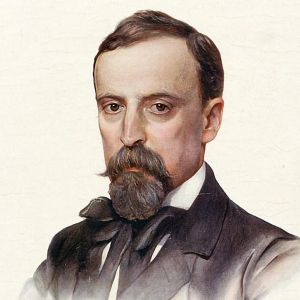
Henryk Sienkiewicz was a Polish novelist and journalist, best known for his historical novels. His most famous work, "Quo Vadis," set in ancient Rome, brought him international fame and was adapted into several films. Sienkiewicz's trilogy, consisting of "With Fire and Sword," "The Deluge," and "Fire in the Steppe," celebrated Polish history and heroism. In 1905, he was awarded the Nobel Prize in Literature for his outstanding achievements, particularly in epic historical fiction.
Author's Books:
Sort by:
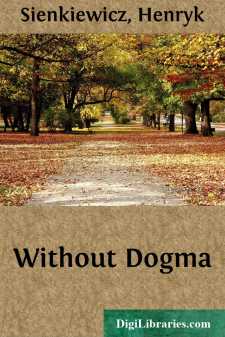
WITHOUT DOGMA. ROME, 9 January. Some months ago I met my old friend and school-fellow, Jozef Sniatynski, who for the last few years has occupied a prominent place among our literary men. In a discussion about literature Sniatynski spoke about diaries. He said that a man who leaves memoirs, whether well or badly written, provided they be sincere, renders a service to future psychologists and writers,...
more...

PART SECOND SO RUNS THE WORLD ZOLA. I have a great respect for every accomplished work. Every time I put on the end of any of my works finis, I feel satisfied; not because the work is done, not on account of future success, but on account of an accomplished deed. Every book is a deed—bad or good, but at any rate accomplished—and a series of them, written with a special aim, is an accomplished...
more...