

Categories
- Antiques & Collectibles 13
- Architecture 36
- Art 48
- Bibles 22
- Biography & Autobiography 816
- Body, Mind & Spirit 145
- Business & Economics 32
- Children's Books 15
- Children's Fiction 13
- Computers 4
- Cooking 94
- Crafts & Hobbies 4
- Drama 346
- Education 64
- Family & Relationships 62
- Fiction 11848
- Foreign Language Study 2
- Games 19
- Gardening 17
- Health & Fitness 36
- History 1383
- House & Home 1
- Humor 147
- Juvenile Fiction 1884
- Juvenile Nonfiction 202
- Language Arts & Disciplines 89
- Law 16
- Literary Collections 687
- Literary Criticism 179
- Mathematics 13
- Medical 43
- Music 40
- Nature 181
- Non-Classifiable 1768
- Performing Arts 7
- Periodicals 1453
- Philosophy 65
- Photography 2
- Poetry 897
- Political Science 206
- Psychology 44
- Reference 154
- Religion 516
- Science 128
- Self-Help 89
- Social Science 84
- Sports & Recreation 34
- Study Aids 3
- Technology & Engineering 60
- Transportation 23
- Travel 463
- True Crime 29
Henry Jones Ford
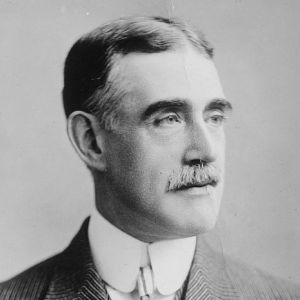
Henry Jones Ford (1851–1925) was an American political scientist, journalist, and historian, known for his contributions to the study of American government and public administration. He authored influential works, such as "The Rise and Growth of American Politics" (1898) and "The Cleveland Era: A Chronicle of the New Order in Politics" (1919), focusing on the evolution of American political institutions. Ford was also a professor at Princeton University and played a key role in promoting the study of political science in higher education. His work is notable for blending historical analysis with insights into contemporary political challenges.
Author's Books:
Sort by:

by:
Henry Jones Ford
CHAPTER I. A TRANSITION PERIOD Politicians at Washington very generally failed to realize that the advent of President Hayes marked the dismissal of the issues of war and reconstruction. They regarded as an episode what turned out to be the close of an era. They saw, indeed, that public interest in the old issues had waned, but they were confident that this lack of interest was transient. They admitted...
more...
by:
Henry Jones Ford
CHAPTER I AN IMITATION COURT Washington was glad to remain at Mount Vernon as long as possible after he had consented to serve as President, enjoying the life of a country gentleman, which was now much more suited to his taste than official employment. He was weary of public duties and the heavy demands upon his time which had left him with little leisure for his private life at home. His...
more...