

Categories
- Antiques & Collectibles 13
- Architecture 36
- Art 48
- Bibles 22
- Biography & Autobiography 815
- Body, Mind & Spirit 145
- Business & Economics 28
- Children's Books 15
- Children's Fiction 12
- Computers 4
- Cooking 94
- Crafts & Hobbies 4
- Drama 346
- Education 63
- Family & Relationships 59
- Fiction 11841
- Foreign Language Study 1
- Games 19
- Gardening 17
- Health & Fitness 35
- History 1382
- House & Home 1
- Humor 147
- Juvenile Fiction 1880
- Juvenile Nonfiction 202
- Language Arts & Disciplines 89
- Law 16
- Literary Collections 687
- Literary Criticism 179
- Mathematics 13
- Medical 43
- Music 40
- Nature 181
- Non-Classifiable 1768
- Performing Arts 7
- Periodicals 1453
- Philosophy 65
- Photography 2
- Poetry 897
- Political Science 205
- Psychology 44
- Reference 154
- Religion 516
- Science 128
- Self-Help 87
- Social Science 83
- Sports & Recreation 34
- Study Aids 3
- Technology & Engineering 60
- Transportation 23
- Travel 463
- True Crime 29
Henry Edward Krehbiel
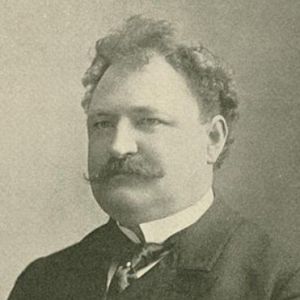
Henry Edward Krehbiel (1854–1923) was an American music critic and author, renowned for his work in music journalism and ethnomusicology. He served as the chief music critic for the New York Tribune for over 40 years, where he became a leading voice in classical music criticism. Krehbiel wrote several influential books, including "How to Listen to Music" and "The Philharmonic Society of New York." He was particularly noted for his pioneering studies on African American spirituals, especially his book "Afro-American Folksongs," which explored the origins and significance of Black music in America.
Author's Books:
Sort by:

CHAPTER I BIBLICAL OPERAS Whether or not the English owe a grudge to their Lord Chamberlain for depriving them of the pleasure of seeing operas based on Biblical stories I do not know. If they do, the grudge cannot be a deep one, for it is a long time since Biblical operas were in vogue, and in the case of the very few survivals it has been easy to solve the difficulty and salve the conscience of the...
more...
IntroductionThe book's appeal.This book has a purpose, which is as simple as it is plain; and an unpretentious scope. It does not aim to edify either the musical professor or the musical scholar. It comes into the presence of the musical student with all becoming modesty. Its business is with those who love music and present themselves for its gracious ministrations in Concert-Room and Opera...
more...