

Categories
- Antiques & Collectibles 13
- Architecture 36
- Art 48
- Bibles 22
- Biography & Autobiography 815
- Body, Mind & Spirit 144
- Business & Economics 28
- Children's Books 15
- Children's Fiction 12
- Computers 4
- Cooking 94
- Crafts & Hobbies 4
- Drama 346
- Education 63
- Family & Relationships 59
- Fiction 11840
- Foreign Language Study 1
- Games 19
- Gardening 17
- Health & Fitness 35
- History 1382
- House & Home 1
- Humor 147
- Juvenile Fiction 1877
- Juvenile Nonfiction 202
- Language Arts & Disciplines 89
- Law 16
- Literary Collections 687
- Literary Criticism 179
- Mathematics 13
- Medical 43
- Music 40
- Nature 181
- Non-Classifiable 1768
- Performing Arts 7
- Periodicals 1453
- Philosophy 65
- Photography 2
- Poetry 897
- Political Science 205
- Psychology 44
- Reference 154
- Religion 516
- Science 128
- Self-Help 86
- Social Science 83
- Sports & Recreation 34
- Study Aids 3
- Technology & Engineering 60
- Transportation 23
- Travel 463
- True Crime 29
Henry Cabot Lodge
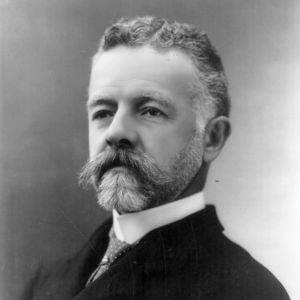
Henry Cabot Lodge was an influential American statesman, historian, and writer, best known for his role in U.S. foreign policy during the late 19th and early 20th centuries. As a close ally of Theodore Roosevelt, Lodge was a leading advocate for American imperialism and played a significant role in the Senate's rejection of the Treaty of Versailles. He authored several historical works, including "Hero Tales from American History" and "The History of the American Revolution." Lodge's staunch opposition to the League of Nations marked him as a key figure in the debate over America's role in international affairs.
Author's Books:
Sort by:

CHAPTER I. CHILDHOOD AND YOUTH. No sooner was the stout Puritan Commonwealth of Massachusetts firmly planted than it began rapidly to throw out branches in all directions. With every succeeding year the long, thin, sinuous line of settlements stretched farther and farther away to the northeast, fringing the wild shores of the Atlantic with houses and farms gathered together at the mouths or on the...
more...
CHAPTER I To know George Washington, we must first of all understand the society in which he was born and brought up. As certain lilies draw their colors from the subtle qualities of the soil hidden beneath the water upon which they float, so are men profoundly affected by the obscure and insensible influences which surround their childhood and youth. The art of the chemist may discover perhaps the...
more...
CHAPTER I Having resigned his commission, Washington stood not upon the order of his going, but went at once to Virginia, and reached Mount Vernon the next day, in season to enjoy the Christmas-tide at home. It was with a deep sigh of relief that he sat himself down again by his own fireside, for all through the war the one longing that never left his mind was for the banks of the Potomac. He loved...
more...
WASHINGTON The brilliant historian of the English people [*] has written of Washington, that "no nobler figure ever stood in the fore-front of a nation's life." In any book which undertakes to tell, no matter how slightly, the story of some of the heroic deeds of American history, that noble figure must always stand in the fore-front. But to sketch the life of Washington even in the barest...
more...