

Categories
- Antiques & Collectibles 13
- Architecture 36
- Art 48
- Bibles 22
- Biography & Autobiography 815
- Body, Mind & Spirit 145
- Business & Economics 28
- Children's Books 15
- Children's Fiction 12
- Computers 4
- Cooking 94
- Crafts & Hobbies 4
- Drama 346
- Education 63
- Family & Relationships 59
- Fiction 11841
- Foreign Language Study 1
- Games 19
- Gardening 17
- Health & Fitness 35
- History 1382
- House & Home 1
- Humor 147
- Juvenile Fiction 1880
- Juvenile Nonfiction 202
- Language Arts & Disciplines 89
- Law 16
- Literary Collections 687
- Literary Criticism 179
- Mathematics 13
- Medical 43
- Music 40
- Nature 181
- Non-Classifiable 1768
- Performing Arts 7
- Periodicals 1453
- Philosophy 65
- Photography 2
- Poetry 897
- Political Science 205
- Psychology 44
- Reference 154
- Religion 516
- Science 128
- Self-Help 87
- Social Science 83
- Sports & Recreation 34
- Study Aids 3
- Technology & Engineering 60
- Transportation 23
- Travel 463
- True Crime 29
Henry Bradley
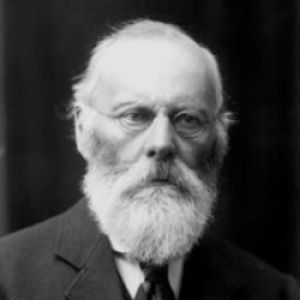
Henry Bradley (1845–1923) was an English philologist and lexicographer known for his work on the "Oxford English Dictionary" (OED). He succeeded James Murray as the chief editor of the OED in 1886, contributing significantly to its early volumes. Bradley also authored "The Making of English," a notable work on the development of the English language. His expertise in Germanic languages and historical linguistics established him as a leading figure in lexicography.
Author's Books:
Sort by:
by:
Henry Bradley
ON THE PRONUNCIATION OF ENGLISH WORDS DERIVED FROM LATIN [This paper may perhaps need a few words of introduction concerning the history of the pronunciation of Latin in England. The Latin taught by Pope Gregory's missionaries to their English converts at the beginning of the seventh century was a living language. Its pronunciation, in the mouths of educated people when they spoke carefully, was...
more...
by:
Henry Bradley
INTRODUCTION. The work now for the first time reprinted from Caxton’s original edition has been preserved in three copies. One of these is in the Library of Ripon Cathedral, another in the Spencer Library, now at Manchester, and the third at Bamborough Castle. A small fragment, consisting of pp. 17-18 and 27-28, is in the Bodleian Library. The text of the present edition is taken from the Ripon copy....
more...