

Categories
- Antiques & Collectibles 13
- Architecture 36
- Art 48
- Bibles 22
- Biography & Autobiography 816
- Body, Mind & Spirit 145
- Business & Economics 30
- Children's Books 15
- Children's Fiction 12
- Computers 4
- Cooking 94
- Crafts & Hobbies 4
- Drama 346
- Education 64
- Family & Relationships 59
- Fiction 11841
- Foreign Language Study 2
- Games 19
- Gardening 17
- Health & Fitness 35
- History 1383
- House & Home 1
- Humor 147
- Juvenile Fiction 1884
- Juvenile Nonfiction 202
- Language Arts & Disciplines 89
- Law 16
- Literary Collections 687
- Literary Criticism 179
- Mathematics 13
- Medical 43
- Music 40
- Nature 181
- Non-Classifiable 1768
- Performing Arts 7
- Periodicals 1453
- Philosophy 65
- Photography 2
- Poetry 897
- Political Science 205
- Psychology 44
- Reference 154
- Religion 516
- Science 128
- Self-Help 87
- Social Science 83
- Sports & Recreation 34
- Study Aids 3
- Technology & Engineering 60
- Transportation 23
- Travel 463
- True Crime 29
Harold Frederic
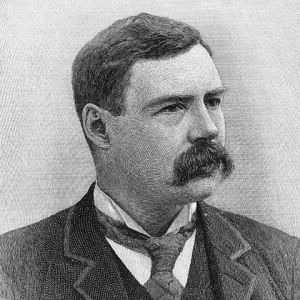
Harold Frederic (1856–1898) was an American journalist and novelist known for his realistic portrayals of life in rural New York. He is best remembered for his novel "The Damnation of Theron Ware" (1896), which explores themes of religious doubt and moral conflict in a small-town setting. Frederic worked as a journalist for various publications, including "The New York Times", while also producing fiction that often focused on the social and cultural tensions of his time. His other notable works include "In the Valley" (1890) and "The Lawton Girl" (1890).
Author's Books:
Sort by:
by:
Harold Frederic
CHAPTER I No such throng had ever before been seen in the building during all its eight years of existence. People were wedged together most uncomfortably upon the seats; they stood packed in the aisles and overflowed the galleries; at the back, in the shadows underneath these galleries, they formed broad, dense masses about the doors, through which it would be hopeless to attempt a passage. The light,...
more...

by:
Harold Frederic
CHAPTER I THE battle was over, and the victor remained on the field—sitting alone with the hurly-burly of his thoughts. His triumph was so sweeping and comprehensive as to be somewhat shapeless to the view. He had a sense of fascinated pain when he tried to define to himself what its limits would probably be. Vistas of unchecked, expanding conquest stretched away in every direction. He held at his...
more...