

Categories
- Antiques & Collectibles 13
- Architecture 36
- Art 48
- Bibles 22
- Biography & Autobiography 815
- Body, Mind & Spirit 144
- Business & Economics 28
- Children's Books 15
- Children's Fiction 12
- Computers 4
- Cooking 94
- Crafts & Hobbies 4
- Drama 346
- Education 63
- Family & Relationships 59
- Fiction 11839
- Foreign Language Study 1
- Games 19
- Gardening 17
- Health & Fitness 35
- History 1382
- House & Home 1
- Humor 147
- Juvenile Fiction 1873
- Juvenile Nonfiction 202
- Language Arts & Disciplines 89
- Law 16
- Literary Collections 687
- Literary Criticism 179
- Mathematics 13
- Medical 43
- Music 40
- Nature 181
- Non-Classifiable 1768
- Performing Arts 7
- Periodicals 1453
- Philosophy 65
- Photography 2
- Poetry 897
- Political Science 205
- Psychology 44
- Reference 154
- Religion 516
- Science 128
- Self-Help 86
- Social Science 83
- Sports & Recreation 34
- Study Aids 3
- Technology & Engineering 60
- Transportation 23
- Travel 463
- True Crime 29
Hamlin Garland
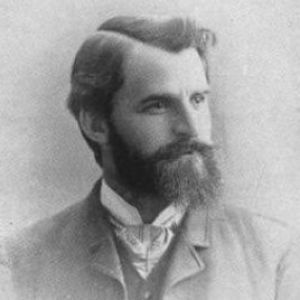
Hamlin Garland (1860-1940) was an American novelist, short story writer, and essayist known for his realist portrayals of Midwestern farm life. His most famous work, "Main-Travelled Roads" (1891), is a collection of short stories that vividly depict the hardships and struggles of rural farmers. Garland received the Pulitzer Prize for Biography in 1922 for his autobiography "A Daughter of the Middle Border."
Author's Books:
Sort by:

by:
Hamlin Garland
THE CLERK OF THE GOLDEN EAGLE Sibley Junction is in the sub-tropic zone of Colorado. It lies in a hot, dry, but immensely productive valley at an altitude of some four thousand feet above the sea, a village laced with irrigating ditches, shaded by big cotton-wood-trees, and beat upon by a genial, generous-minded sun. The boarders at the Golden Eagle Hotel can sit on the front stoop and see the...
more...
by:
Hamlin Garland
VICTOR READS THE FATEFUL STAR Saturday had been a strenuous day for the baseball team of Winona University, and Victor Ollnee, its redoubtable catcher, slept late. Breakfast at the Beta Kappa Fraternity House on Sunday started without him, and Gilbert Frenson, who never played ball or tennis, and Arnold Macey, who was too effeminate to swing a bat, divided the Sunday morning Star between them. "See...
more...

by:
Hamlin Garland
THE GRUB-STAKER I "There's gold in the Sierra Blanca country—everybody admits it," Sherman F. Bidwell was saying as the Widow Delaney, who kept the Palace Home Cooking Restaurant in the town of Delaney (named after her husband, old Dan Delaney), came into the dining-room. Mrs. Delaney paused with a plate of steaming potatoes, and her face was a mask of scorn as she addressed the group,...
more...
by:
Hamlin Garland
THE HAPPY GIRL The stage line which ran from Williams to Bear Tooth (one of the most authentic then to be found in all the West) possessed at least one genuine Concord coach, so faded, so saddened, so cracked, and so splintered that its passengers entered it under protest, and alighted from it with thanksgiving, and yet it must have been built by honorable men, for in 190- it still made the run of one...
more...
by:
Hamlin Garland
ANTICIPATIONI will wash my brain in the splendid breeze,I will lay my cheek to the northern sun,I will drink the breath of the mossy trees,And the clouds shall meet me one by one.I will fling the scholar's pen aside,And grasp once more the bronco's rein,And I will ride and ride and ride,Till the rain is snow, and the seed is grain.The way is long and cold and lone—But I go.It leads where...
more...

by:
Hamlin Garland
The Spirit of Sweetwater CHAPTER I One spring day a young man of good mental furnishing and very slender purse walked over the shoulder of Mount Mogallon and down the trail to Gold Creek. He walked because the stage fare seemed too high. Two years and four months later he was pointed out to strangers by the people of Sweetwater Springs. "That is Richard Clement, the sole owner of 'The...
more...
by:
Hamlin Garland
HIS YOUTH Harold was about ten years of age when his father, the Rev. Mr. Excell, took the pastorate of the First Church in Rock River. Many of the people in his first congregation remarked upon "the handsome lad." The clear brown of his face, his big yellow-brown eyes, his slender hands, and the grace of his movements gave him distinction quite aside from that arising from his connection with...
more...
by:
Hamlin Garland
THE SETTING The village of Colorow is enclosed by a colossal amphitheatre of dove-gray stone, in whose niches wind-warped pines stand like spectators silent and waiting. Six thousand feet above the valley floor green and orange slopes run to the edges of perennial ice-fields, while farther away, and peering above these almost inaccessible defences, like tents of besieging Titans, rise three great...
more...
by:
Hamlin Garland
MARCH Early in the gray and red dawn of a March morning in 1883, two wagons moved slowly out of Boomtown, the two-year-old "giant of the plains." As the teams drew past the last house, the strangeness of the scene appealed irresistibly to the newly arrived immigrants. The town lay behind them on the level, treeless plain like a handful of blocks pitched upon a russet robe. Its houses were...
more...
by:
Hamlin Garland
—I— To My New Readers In the summer of 1893, after nine years of hard but happy literary life in Boston and New York, I decided to surrender my residence in the East and reëstablish my home in the West, a decision which seemed to be—as it was—a most important event in my career. This change of headquarters was due not to a diminishing love for New England, but to a deepening desire to be near...
more...