

Categories
- Antiques & Collectibles 13
- Architecture 36
- Art 48
- Bibles 22
- Biography & Autobiography 815
- Body, Mind & Spirit 144
- Business & Economics 28
- Children's Books 15
- Children's Fiction 12
- Computers 4
- Cooking 94
- Crafts & Hobbies 4
- Drama 346
- Education 63
- Family & Relationships 59
- Fiction 11841
- Foreign Language Study 1
- Games 19
- Gardening 17
- Health & Fitness 35
- History 1382
- House & Home 1
- Humor 147
- Juvenile Fiction 1877
- Juvenile Nonfiction 202
- Language Arts & Disciplines 89
- Law 16
- Literary Collections 687
- Literary Criticism 179
- Mathematics 13
- Medical 43
- Music 40
- Nature 181
- Non-Classifiable 1768
- Performing Arts 7
- Periodicals 1453
- Philosophy 65
- Photography 2
- Poetry 897
- Political Science 205
- Psychology 44
- Reference 154
- Religion 516
- Science 128
- Self-Help 86
- Social Science 83
- Sports & Recreation 34
- Study Aids 3
- Technology & Engineering 60
- Transportation 23
- Travel 463
- True Crime 29
H. W. (Herbert William) Conn
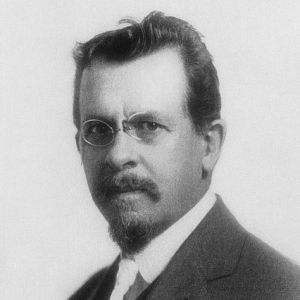
Herbert William Conn was an American bacteriologist and writer known for his contributions to microbiology and science education. He authored several influential books, including "Bacteria, Yeast, and Molds in the Home" (1903) and "The Story of Germ Life" (1897), which popularized the study of bacteria and its role in everyday life. Conn was a professor at Wesleyan University, where he focused on the application of bacteriology in public health and sanitation. His work helped to make complex scientific concepts more accessible to the general public during the early 20th century.
Author's Books:
Sort by:
CHAPTER I. BACTERIA AS PLANTS. During the last fifteen years the subject of bacteriology [Footnote: The term microbe is simply a word which has been coined to include all of the microscopic plants commonly included under the terms bacteria and yeasts.] has developed with a marvellous rapidity. At the beginning of the ninth decade of the century bacteria were scarcely heard of outside of scientific...
more...
CHAPTER I. IS THE BODY A MACHINE? The problem before us in this section is to find out to what extent animals and plants are machines. We wish to determine whether the laws and forces which regulate their activities are the same as the laws and forces with which we experiment in the chemical and physical laboratory, and whether the principles of mechanics and the doctrine of the conservation of energy...
more...