

Categories
- Antiques & Collectibles 13
- Architecture 36
- Art 48
- Bibles 22
- Biography & Autobiography 815
- Body, Mind & Spirit 145
- Business & Economics 28
- Children's Books 15
- Children's Fiction 12
- Computers 4
- Cooking 94
- Crafts & Hobbies 4
- Drama 346
- Education 63
- Family & Relationships 59
- Fiction 11841
- Foreign Language Study 1
- Games 19
- Gardening 17
- Health & Fitness 35
- History 1382
- House & Home 1
- Humor 147
- Juvenile Fiction 1880
- Juvenile Nonfiction 202
- Language Arts & Disciplines 89
- Law 16
- Literary Collections 687
- Literary Criticism 179
- Mathematics 13
- Medical 43
- Music 40
- Nature 181
- Non-Classifiable 1768
- Performing Arts 7
- Periodicals 1453
- Philosophy 65
- Photography 2
- Poetry 897
- Political Science 205
- Psychology 44
- Reference 154
- Religion 516
- Science 128
- Self-Help 87
- Social Science 83
- Sports & Recreation 34
- Study Aids 3
- Technology & Engineering 60
- Transportation 23
- Travel 463
- True Crime 29
George Willis Cooke
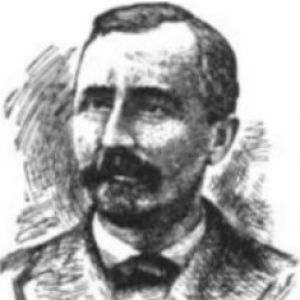
George Willis Cooke (1848–1923) was an American Unitarian minister, essayist, and literary critic known for his works on American Transcendentalism and women's rights. He is best known for writing "Ralph Waldo Emerson: His Life, Writings, and Philosophy" (1881), which is one of the earliest comprehensive studies of Emerson. Cooke also authored "A Guide-Book to the Poetic and Dramatic Works of Robert Browning" (1891), highlighting his interest in Victorian literature. Additionally, he was an advocate for women's rights and wrote the important work "Women of the American Revolution" (1901).
Author's Books:
Sort by:
PREFACE. The aim I have had in view in writing this book has been to give a history of the origin of Unitarianism in the United States, how it has organized itself, and what it has accomplished. It seemed desirable to deal more fully than has been done hitherto with the obscure beginnings of the Unitarian movement in New England; but limits of space have made it impossible to treat this phase of the...
more...
I. EARLY LIFE. The poet and the novelist write largely out of personal experience, and must give expression to the effects of their own history. What they have seen and felt, gives shape and tone to what they write; that which is nearest their own hearts is poured forth in their books. To ignore these influences is to overlook a better part of what they write, and is often to lose the explanation of...
more...
EARLY LIFE AT BROOK FARM AND CONCORD George William Curtis was born in Providence, February 24, 1824. From the age of six to eleven he was in the school of C.W. Greene at Jamaica Plain, and then, until he was fifteen, attended school in Providence. His brother Burrill, two years older, was his inseparable companion, and they were strongly attached to each other. About 1835 Curtis came under the...
more...