

Categories
- Antiques & Collectibles 13
- Architecture 36
- Art 48
- Bibles 22
- Biography & Autobiography 815
- Body, Mind & Spirit 144
- Business & Economics 28
- Children's Books 15
- Children's Fiction 12
- Computers 4
- Cooking 94
- Crafts & Hobbies 4
- Drama 346
- Education 63
- Family & Relationships 59
- Fiction 11841
- Foreign Language Study 1
- Games 19
- Gardening 17
- Health & Fitness 35
- History 1382
- House & Home 1
- Humor 147
- Juvenile Fiction 1877
- Juvenile Nonfiction 202
- Language Arts & Disciplines 89
- Law 16
- Literary Collections 687
- Literary Criticism 179
- Mathematics 13
- Medical 43
- Music 40
- Nature 181
- Non-Classifiable 1768
- Performing Arts 7
- Periodicals 1453
- Philosophy 65
- Photography 2
- Poetry 897
- Political Science 205
- Psychology 44
- Reference 154
- Religion 516
- Science 128
- Self-Help 86
- Social Science 83
- Sports & Recreation 34
- Study Aids 3
- Technology & Engineering 60
- Transportation 23
- Travel 463
- True Crime 29
George P. Marsh
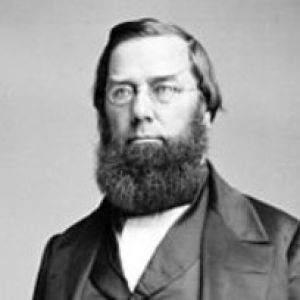
George Perkins Marsh (1801–1882) was an American diplomat, philologist, and one of the first environmentalists. He is best known for his groundbreaking book "Man and Nature" (1864), which highlighted the destructive impact of human activities on the environment. Marsh argued that deforestation, soil erosion, and other forms of environmental degradation were consequences of human actions and needed urgent attention. His work laid the foundation for modern conservation movements and influenced the development of environmental policies.
Author's Books:
Sort by:
by:
George P. Marsh
CHAPTER 1. INTRODUCTORY. Natural Advantages of the Territory of the Roman Empire.—Physical Decayof that Territory.—Causes of the Decay.—Reaction of Man on Nature.—Observation of Nature.—Uncertainty of Our Historical Knowledge ofAncient Climates.—Uncertainty of Modern Meteorology.—Stability ofNature.—Formation of Bogs—Natural Conditions Favorable to...
more...
by:
George P. Marsh
CHAPTER I THE LAND OF THE WINDIGO The solitudes of the East Coast had shaken off the grip of the long snows. A thousand streams and rivers choked with snow water from bleak Ungava hills plunged and foamed and raced into the west, seeking the salt Hudson's Bay, the "Big Water" of the Crees. In the lakes the honeycombed ice was daily fading under the strengthening sun. Already, here and...
more...