

Categories
- Antiques & Collectibles 13
- Architecture 36
- Art 48
- Bibles 22
- Biography & Autobiography 816
- Body, Mind & Spirit 145
- Business & Economics 30
- Children's Books 15
- Children's Fiction 13
- Computers 4
- Cooking 94
- Crafts & Hobbies 4
- Drama 346
- Education 64
- Family & Relationships 61
- Fiction 11842
- Foreign Language Study 2
- Games 19
- Gardening 17
- Health & Fitness 35
- History 1383
- House & Home 1
- Humor 147
- Juvenile Fiction 1884
- Juvenile Nonfiction 202
- Language Arts & Disciplines 89
- Law 16
- Literary Collections 687
- Literary Criticism 179
- Mathematics 13
- Medical 43
- Music 40
- Nature 181
- Non-Classifiable 1768
- Performing Arts 7
- Periodicals 1453
- Philosophy 65
- Photography 2
- Poetry 897
- Political Science 205
- Psychology 44
- Reference 154
- Religion 516
- Science 128
- Self-Help 87
- Social Science 83
- Sports & Recreation 34
- Study Aids 3
- Technology & Engineering 60
- Transportation 23
- Travel 463
- True Crime 29
George Combe
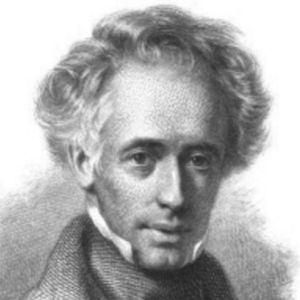
George Combe (1788–1858) was a Scottish lawyer and writer, best known for his influential work in phrenology, the now-discredited study of skull shape and its supposed connection to mental faculties. His most famous book, "The Constitution of Man," published in 1828, became a bestseller and laid out his views on how individuals should live in harmony with natural laws. Combe was a key figure in the popularization of phrenology in Britain and the United States during the 19th century. Despite the decline of phrenology's credibility, his contributions to educational and social reform, particularly in advocating for mental health awareness, left a lasting legacy.
Author's Books:
Sort by:
by:
George Combe
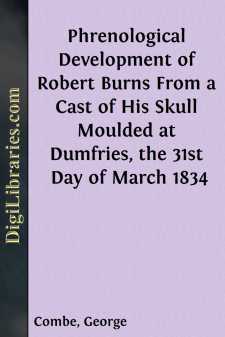
The cast of a Skull does not show the temperament of the individual, but the portraits of Burns indicate the bilious and nervous temperaments—the sources of strength, activity, and susceptibility; and the descriptions given by his contemporaries of his beaming and energetic eye, and the rapidity and impetuosity of his manifestations, establish the inference that his brain was active and susceptible....
more...