

Categories
- Antiques & Collectibles 13
- Architecture 36
- Art 48
- Bibles 22
- Biography & Autobiography 815
- Body, Mind & Spirit 144
- Business & Economics 28
- Children's Books 15
- Children's Fiction 12
- Computers 4
- Cooking 94
- Crafts & Hobbies 4
- Drama 346
- Education 63
- Family & Relationships 59
- Fiction 11839
- Foreign Language Study 1
- Games 19
- Gardening 17
- Health & Fitness 35
- History 1382
- House & Home 1
- Humor 147
- Juvenile Fiction 1873
- Juvenile Nonfiction 202
- Language Arts & Disciplines 89
- Law 16
- Literary Collections 687
- Literary Criticism 179
- Mathematics 13
- Medical 43
- Music 40
- Nature 181
- Non-Classifiable 1768
- Performing Arts 7
- Periodicals 1453
- Philosophy 65
- Photography 2
- Poetry 897
- Political Science 205
- Psychology 44
- Reference 154
- Religion 515
- Science 128
- Self-Help 86
- Social Science 83
- Sports & Recreation 34
- Study Aids 3
- Technology & Engineering 60
- Transportation 23
- Travel 463
- True Crime 29
Friedrich von Bernhardi
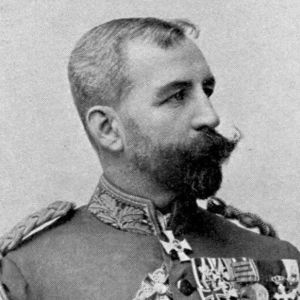
Friedrich von Bernhardi (1849–1930) was a German general and military historian best known for his nationalist writings and advocacy of aggressive German expansionism. He authored several influential works, most notably "Germany and the Next War" (1911), where he promoted the idea of war as a necessary and natural element of national policy. Bernhardi argued that Germany was destined to dominate Europe and that war would be essential to achieve this goal. His views contributed to the militaristic atmosphere in pre-World War I Germany and were influential among both military leaders and nationalists.
Author's Books:
Sort by:

PREFACE I ventured to express the opinion in my book, 'With General French and the Cavalry in South Africa,' that if a high ideal of the duties and possibilities of Cavalry is set before our officers, and the means of instruction and training are placed within their reach, we shall possess in our next great War a force which, if led by men of the stamp of General Sir John French, will prove...
more...

CHAPTER I THE RIGHT TO MAKE WAR Since 1795, when Immanuel Kant published in his old age his treatise on "Perpetual Peace," many have considered it an established fact that war is the destruction of all good and the origin of all evil. In spite of all that history teaches, no conviction is felt that the struggle between nations is inevitable, and the growth of civilization is credited with a...
more...